
You wake up at 3.47 a.m. again, not because of a noise or a vivid dream, but because your toes feel like they’ve been left outside. The room is perfectly warm, the clock’s glow is familiar, and still you end up doing that awkward under-the-duvet dance: flexing, rubbing, hunting for a patch of heat that never quite arrives.
You add a thicker duvet one winter, double your socks the next. Someone suggests an electric blanket, someone else blames “bad circulation” or age. None of it quite matches that simple, stubborn fact: your upper body feels snug, but your feet might as well be camping in January.
In the last few years, sleep labs have quietly been filming exactly this with infrared cameras. Volunteers lie under duvets, drifting off, while researchers watch heat signatures bloom and fade on screens. A pattern keeps showing up. The cold feet are not a mystery illness. They’re often the result of a very ordinary bedding habit.
It’s not the thermostat. It’s not your slippers. It’s what’s happening right at the foot of the bed, where cloth meets mattress and your toes run out of room.
Sleep specialists now talk about it in almost throwaway terms: fix that bit, they say, and a surprising number of “cold feet” complaints simply ebb away.
The quiet physics of cold feet in a warm bed
Your body has a bedtime ritual baked into it. About an hour before you naturally sleep, your core temperature starts to fall. Blood vessels in your hands and feet widen, sending warm blood outwards so your centre can cool down a fraction. That small drop is one of the signals your brain uses to slide into sleep.
If your feet stay cold, that cooling choreography stutters. You don’t just feel uncomfortable; studies show people with persistently cold feet take longer to fall asleep and wake more during the night. The brain keeps getting mixed messages: the core wants to drift, the extremities insist something’s wrong.
Look at this through a thermal camera and it’s blunt. The torso glows, the thighs look fine, and then the image fades to darker blues at the toes. Researchers in one European lab jokingly call it “the penguin zone” – feet tucked up against each other, trying to steal warmth the bedding never really offers.
It isn’t only about room temperature. It’s about how air and fabric move (or don’t move) around the very end of the bed. Which is where that everyday mistake creeps in.
The bedding mistake most of us make without thinking
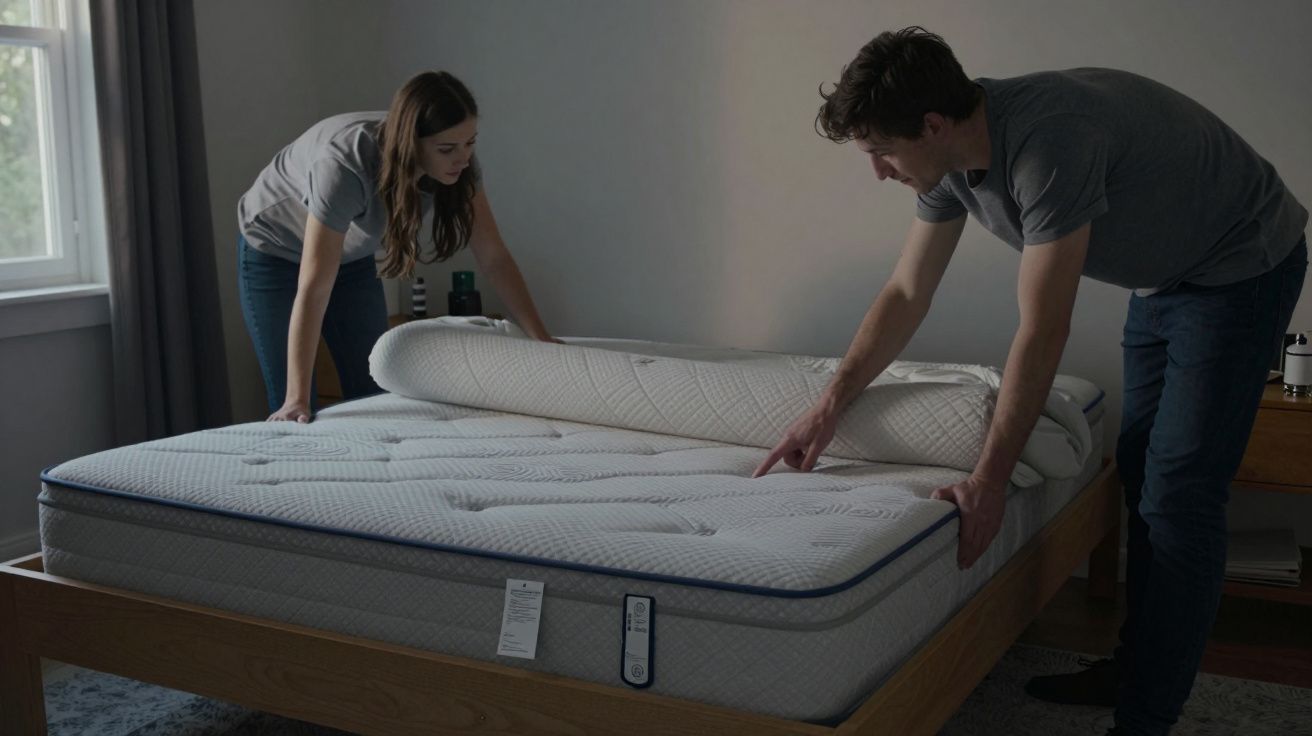
Many of us were taught that a “properly made bed” means the duvet or top sheet tucked tightly under the mattress at the bottom. Hotel corners, smooth lines, no loose fabric. It looks neat. It feels secure for the first few minutes you slide in.
That tidy edge is also where a lot of warmth gets stolen.
When you ram the duvet tightly under the mattress, you do three things at once:
- you flatten the insulation at the foot so there’s very little loft left over your toes
- you pin your feet down, giving them less room to move and reducing blood flow if you point or press against the tuck
- you create a cold seam where fabric is stretched thin over the bed edge and any small draughts find their way in
Down, synthetic fill, wool – they all work by trapping still air. Compress them hard enough and they insulate about as well as a tea towel. Add in the fact that your feet sit at the very edge of the mattress, often closest to a window or door gap, and you get a perfect recipe for a cold strip right where you’re most sensitive.
Sleep researchers see a similar effect in people who sleep under a duvet that’s just about big enough. The sides cover the torso well, but at the bottom, the fabric has to travel down the bed and under the mattress. Something has to give. It’s usually the space around your toes.
Tight, elasticated bed socks can make the problem worse, not better. They feel warm for the first minutes, then start to act like a strap, gently squeezing ankles or toes and limiting the very blood flow your feet rely on to stay warm.
Let’s be honest: almost nobody remakes their bed like a hotel every morning because they love the tug on their toes. We do it because it’s what “looks right”.
The small tweak that changes everything
The fix sleep researchers keep coming back to is almost embarrassingly simple: free up the foot of the bed and give your toes their own little climate.
In practice, that means:
- Loosen or skip the tuck at the bottom 20–30 cm of the bed so the duvet can form a soft tent over your feet instead of a tight lid.
- If you share a bed, choose a duvet one size larger than the mattress (e.g. king duvet on a double bed) so there’s enough spare fabric for everyone’s feet to move.
- Lift, don’t press, the covers over your toes. A light extra throw folded like a bridge across the lower shins and ankles can create space under the main duvet without adding a heavy weight directly on your toes.
- If you like some structure, use a low footboard or blanket bar that the duvet can rest on, stopping it collapsing onto your feet.
In lab tests, simply untucking the foot of the covers and adding a small, separate layer over the lower legs was enough to shift foot temperature by a couple of degrees – just enough to move people out of that “penguin zone” and into the band where sleep comes easily.
Crucially, this doesn’t turn the whole bed into a furnace. Your torso can still cool the way it’s meant to; your feet just stop acting like they’ve been left hanging off the end of the world.
A simple “warm feet” routine to try tonight
You don’t need to buy a whole new sleep system. Try this low-drama routine for three or four nights and notice what changes:
- Strip back the tuck: Make the bed with the duvet lying flat, not clamped under the mattress at the foot. If you love a tidy look, you can still smooth the sides and halfway down the bed.
- Add a light foot layer: Fold a thin blanket or throw into a long strip and lay it across the bottom third of the bed, from shin to toe, on top of the duvet. Aim for light and lofty, not heavy.
- Switch to gentle socks (or none): If you like socks, choose loose, wool or bamboo bed socks with no tight band. If your room’s warm enough, try sleeping without socks once the bed has warmed.
- Pre‑warm, then remove heat sources: Use a hot water bottle near your feet for 10–15 minutes before sleep, then remove it or push it to the side. You want your feet gently warm, not sweating against hot rubber for hours.
- Check your feet on waking: For a week, simply note: did you wake because of your feet? Were they actually cold to the touch, or just a bit cool and comfortable?
Most people know within a few nights if this shift helps. When it works, you don’t tend to think “my tweak did it”; you just realise you stopped having to curl into a tight ball at 4 a.m.
Other quiet habits that help your feet stay warm
Once the foot of the bed is sorted, a few small choices can tilt the odds further in your favour.
- Mind the pyjamas: Very tight leggings or pyjama bottoms with a hard cuff at the ankle can act like a tourniquet when you lie on them. Look for soft cuffs or a looser fit.
- Go moderate on duvet tog: A very heavy, high‑tog duvet can overheat your core, triggering your body to shunt blood away from the skin – including your feet. Many sleep clinics favour a medium tog plus targeted foot warmth, rather than one thick, all‑powerful duvet.
- Keep the room cool but not cold: Around 16–18°C is often quoted as an ideal bedroom range. Below that, any draught at floor level makes the foot of the bed harder to keep cosy.
- Move a bit before bed: Gentle stretches or a short walk around the house before you get in bed encourages blood flow to the extremities without revving you up.
Here’s how some common habits stack up:
| Habit / setup | Likely effect on your feet | A better alternative |
|---|---|---|
| Duvet tightly tucked under mattress at the foot | Flattens insulation, pins toes, creates cold seam | Loose foot end, duvet one size larger, light extra layer over lower legs |
| Very thick duvet + no extra foot layer | Warm torso, but feet remain in cooler edge zone | Medium duvet + separate light throw over shins/feet |
| Tight elastic socks in bed | Initial warmth, then restricted circulation | Loose, soft bed socks or bare feet in a well‑insulated foot area |
The bigger story your toes are telling you
Cold feet at night are rarely a medical drama on their own, though persistent numbness, pain or colour changes do deserve a proper check‑up. Most of the time, they’re a quiet signal about how your bed is made, not how your body is failing.
Once you see it, it’s hard to unsee. That crisp tuck at the foot of the bed, the slightly too‑short duvet pulled to look straight, the way hotel beds sometimes feel amazing for 10 minutes and then oddly restrictive. The aesthetics we’re sold are often at odds with how a human body actually wants to sleep.
Small, repeatable tweaks – a looser foot end, a spare throw, kinder socks – don’t look like much. But they are exactly the kind of changes sleep clinics love: cheap, reversible, and rooted in how your biology works.
You may still have nights when stress or noise wake you before your alarm. Yet if your feet stay quietly warm, one common 3 a.m. villain steps off the stage.
And in the middle of the night, that’s often all you need.
FAQ:
- Isn’t waking with cold feet just poor circulation or “bad veins”?
Not always. While some circulation problems can cause cold feet, many people with normal blood flow simply trap their toes under poorly arranged bedding. If loosening the foot of the bed and using lighter, looser socks helps, the issue was likely mechanical rather than medical.- Should I always sleep in socks to keep my feet warm?
Not necessarily. Loose, soft socks can help some people fall asleep faster, but tight or synthetic socks can backfire by restricting blood flow or trapping sweat. Aim for breathable, non‑constricting socks, or bare feet in a well‑insulated foot area.- What if my partner likes the duvet tightly tucked in?
Try a compromise: leave their side tucked at the bottom while freeing up yours, or add a separate, light throw to your half of the bed so your feet have room and extra warmth without rearranging everything.- Will an electric blanket fix cold feet problems on its own?
It can help pre‑warm the bed, but if the foot of the duvet is still tight and flat, your toes may cool again during the night. Most sleep experts suggest using electric blankets briefly before sleep, then switching them off and letting a better bedding setup do the rest.- How long should I give these changes before deciding they work?
You’ll often feel a difference in a night or two. To be sure, try the looser foot end and extra light layer for a full week. If your feet remain painfully cold or numb despite the tweaks, speak to a GP to rule out circulation or nerve issues.




Comments (0)
No comments yet. Be the first to comment!
Leave a Comment