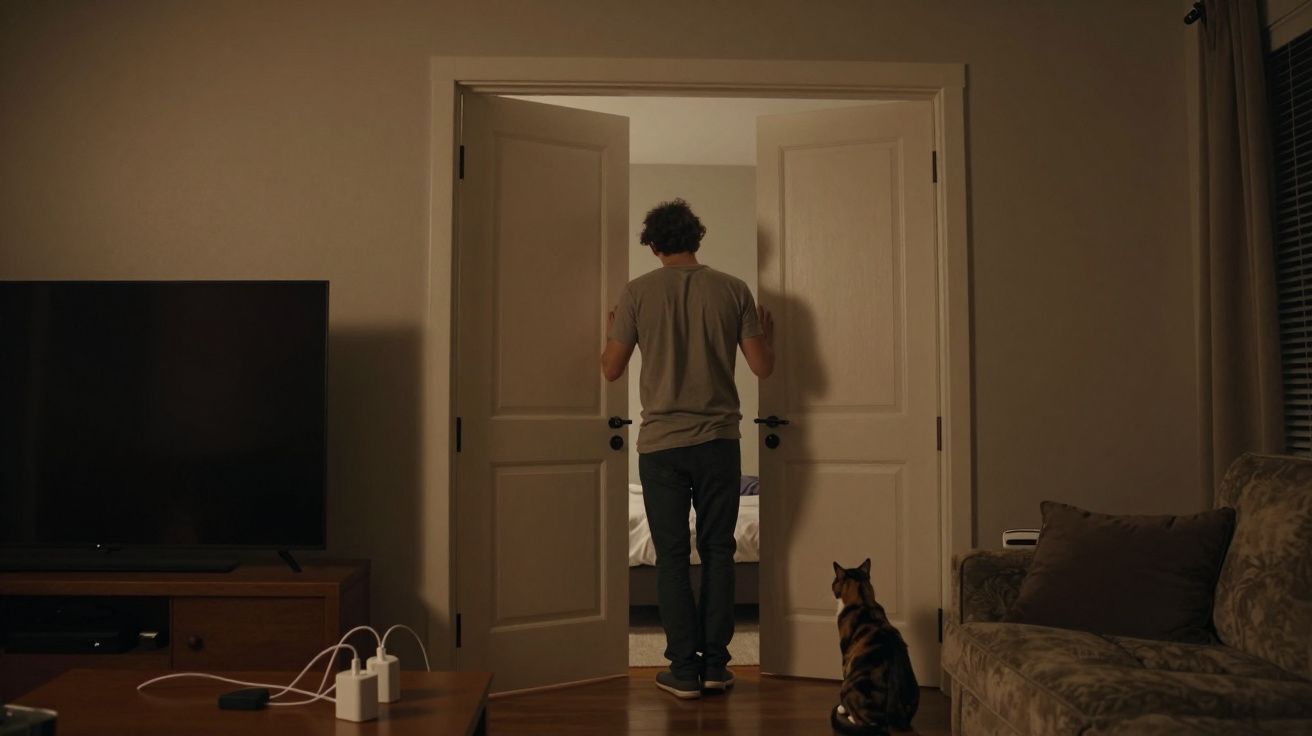
Steam from the dishwasher curls into the hallway. The telly clicks off. Someone calls, “Night, see you in the morning,” and then the familiar shuffle happens: lights out, doors left how they always are. Your bedroom door stays open a crack so you can hear the kids. The kitchen door is propped for the cat. The living room is wide open because you like the idea that you could dash out if anything ever went wrong.
Now imagine the same house at 2am. A charger fails in a socket in the lounge, or a tumble dryer smoulders in the utility. The fire doesn’t roar at first; it creeps. Thick, toxic smoke rolls along the ceiling, hunting for the easiest route: doorways, stairs, gaps. Every open internal door becomes an invitation. By the time the alarm in the hall catches up, that smoke is already heading straight for the rooms where you’re sleeping.
Across the UK, fire brigades have started pushing a simple message that cuts right through this picture: when you close your doors matters just as much as whether you close them at all. They’re calling it, in plain terms, a “night‑time door rule” – and for a lot of families, it quietly flips long‑held habits on their head.
The quiet bedtime mistake that helps fire spread faster
Most of us choose open or closed doors based on comfort, not risk. You leave bedroom doors open because you want to hear a child stir, or because the landing feels less claustrophobic. You prop the living‑room door because the house is old and stuffy and you’re sick of draughts rattling everything.
From a fire‑safety point of view, though, those open doors are like cutting extra holes in the side of a ship.
Modern house fires develop frighteningly fast. Sofas, mattresses, toys and carpets are packed with synthetic materials that burn hotter and produce more smoke than the solid wood our grandparents grew up with. It’s often the smoke, not the flames, that does the real damage. You can be overcome in a few breaths, long before the fire itself reaches you.
An open bedroom door gives that smoke a clear run. A closed door, even an ordinary hollow one, slows it dramatically. Temperature, toxic gases and flames stay on the far side for far longer than most people think. Firefighters routinely find rooms behind closed doors where the bedding is barely singed and the air is breathable, while the landing outside looks like a scene from a disaster film.
The mistake isn’t that we use doors. It’s that we use them at the wrong moments.
What firefighters actually see behind those doors
Ask crews about internal doors and they don’t talk in theory. They talk in contrasts.
On one side of a door: paint blistered, glass cracked, black soot up the walls, fixtures melted into unrecognisable shapes. On the other side: posters still on the wall, soft toys dusty but intact, mobile on the bedside table looking like someone just put it down. The dividing line is quite literally the door frame.
Firefighters tell the same story over and over. Two children’s bedrooms side by side. One door left wide open so Mum could “hear them better”. One door pulled to on the way past because the handle was easier. The fire starts downstairs, races up the stairs and follows the open doorway like a funnel. The closed room stays survivable for crucial extra minutes. The open room doesn’t.
They’re not sharing this to scare you senseless. They’re sharing it because it’s one of the few things an ordinary family can do, tonight, without buying a single bit of kit, that measurably changes their odds.
The “night‑time door rule” in plain English
Fire brigades boil it down to this: when the last adult goes to bed, close as many internal doors as you can between you and where a fire is most likely to start.
In practice, that usually means:
- Close all bedroom doors, including children’s rooms.
- Close the kitchen door – most house fires still start here.
- Close the living‑room or lounge door if there are sockets, chargers, TVs or candles.
- Close home‑office, playroom and utility doors if they contain electrics, batteries or piles of “stuff” that would burn.
- Leave your main escape route planned and clear in your head – but accept that a closed door buys you time, it doesn’t trap you by default.
This isn’t a 24‑hour rule. Nobody’s asking you to live in a warren of shut doors all day. The focus is specifically on night‑time, when:
- You’re asleep and slower to notice danger.
- You’re breathing more deeply.
- Children and older people may be less able to react quickly.
Daytime, you’re awake enough to smell burning, hear odd noises, or see a wisp of smoke. Night‑time, you need every barrier working quietly in your favour.
Why timing your doors matters more than you think
Many people have their own personal “door logic” that turns out, under fire‑service eyes, to be backwards.
You might close the kitchen or living‑room door during the day to “keep heat in”, then leave everything wide open at bedtime because you want the house to feel airy. From a heating point of view that makes sense. From a smoke point of view, you’ve just removed the exact barriers you need when you’re most vulnerable.
Or you might worry that closing a teenager’s door will somehow trap them if there’s a fire. In reality, if fire starts on the stairs or in a nearby room, that closed door is the reason they can stay behind it, call 999, open a window and wait for help. Without it, the smoke reaches them far sooner and their choices narrow quickly.
The “wrong time” to close a door is when you’re shutting something dangerous away and then walking off to bed. A tumble dryer humming in a tiny utility with the door sealed, no smoke detector inside and everyone asleep is not what fire crews want to find. The golden pairing is closed doors + switched‑off hazards.
Which brings us to the bit everyone secretly worries about: what if closing doors makes it harder to hear trouble?
“But what about the kids, the cat and the stuffy room?”
You’re not overreacting if the idea of sleeping behind a closed door makes you uneasy. You may have small children you want to hear instantly, a nervous dog who hates being shut in, or a house that already feels like it’s gasping for air.
Fire brigades suggest nudging, not bulldozing, your habits.
For children:
- Use baby monitors or intercoms so you can hear them with the door mostly closed.
- Start with the door nearly shut, not slammed – 5cm of gap slows smoke more than you’d think, and you can gradually reduce it.
- Make closing their door part of a calm, normal bedtime routine, not a scary “because of fires” lecture.
For pets:
- Let them sleep in your room if that’s what already happens – then the closed door protects you and them.
- If they roam, close the main room doors behind you anyway. A confused cat working out how to nudge a door is better than smoke racing through an open archway.
For ventilation:
- Use trickle vents or slightly open windows rather than relying on open internal doors.
- Prop doors for airflow while you’re awake and nearby, then do a quick sweep at bedtime to pull them all to.
You don’t have to achieve perfect textbook behaviour overnight. But every extra door you can close between bedrooms and likely fire sources is a step in the right direction.
A one‑minute night‑time safety checklist
Firefighters often talk about a “bedtime routine” for the house, not just the children. The heart of it is the night‑time door rule, wrapped in a few other small habits.
Before you go to sleep, try this:
Close internal doors
Bedrooms, lounge, kitchen, office, utility, playroom – anything with electrics, soft furnishings or clutter.Switch off and unplug where you can
Turn off TVs, games consoles, fairy lights and chargers. Avoid running washing machines, dishwashers and tumble dryers while you’re asleep.Blow out flames properly
Extinguish candles, incense and cigarettes. Move lighters and matches out of children’s reach.Clear the escape route
Keep stairs, hallways and exits free from pushchairs, shoes and bags you might trip over in low light and stress.Check alarms and keys
Make sure you have working smoke alarms on every level, test them regularly, and keep door and window keys somewhere everyone knows.
None of this is glamorous. It’s the domestic equivalent of brushing your teeth. But in the small hours, it’s these tiny routines that decide whether your bedroom fills with toxic smoke in two minutes or twenty.
In short: what the “night‑time door rule” gives you
Here’s how the idea stacks up when you strip it back:
| Key point | Detail | Why it matters |
|---|---|---|
| Close doors at bedtime | Pull internal doors shut when the last adult goes to bed | Slows fire and smoke, buys vital escape and rescue time |
| Pair doors with habits | Don’t run risky appliances overnight; check alarms | Reduces chance of a fire starting while you sleep |
| Adapt for your household | Use monitors, pets in bedrooms, small gaps if needed | Keeps safety gains without wrecking your nightly peace |
The aim isn’t to turn your home into a fortress. It’s to give you a quiet, almost invisible layer of protection that works while you’re unconscious.
FAQ:
- Isn’t it safer to sleep with doors open so I can escape quickly? In most real fires, open doors help smoke and heat reach you faster. A closed door doesn’t lock you in; it slows the danger down so you have more time to make a clear decision, whether that’s escaping or staying put and calling 999.
- What if a fire actually starts in the bedroom? If the fire starts where you are, you’re already in the room, so the door position is less important. What matters most then is getting everyone out quickly, closing the door behind you as you go to contain the fire.
- Do I need special “fire doors” for this to work? Proper fire doors are brilliant in flats and new builds, but even standard internal doors make a big difference. The key thing is that they’re closed, not propped open.
- I live in a small flat – does this still apply? Yes. In smaller spaces, smoke can travel even faster. Closing the bedroom, kitchen and living‑room doors at night can still slow its spread and keep at least one room safer for longer.
- We can’t afford to change all our doors – is it still worth bothering? Absolutely. The “night‑time door rule” is about using what you already have more wisely, not spending money. The act of closing doors and switching things off costs nothing and, according to the people who run towards fires for a living, makes a very real difference.

Comments (0)
No comments yet. Be the first to comment!
Leave a Comment