The brown ring on your favourite mug does not mean it is dirty in a general sense. It is a thin, stubborn film of tannins and minerals that clings to the glaze, surviving regular washing and even a hot dishwasher cycle. Many people reach for harsh cream cleaners or scrub away with wire wool, trading the stain for fine scratches and a dulled surface.
Dentists, who spend their days thinking about stains on another type of ceramic surface – your enamel – tend to look at the problem differently. Instead of abrasives and elbow grease, they suggest borrowing a tool from the bathroom shelf that quietly dissolves discolouration.
What makes tea stains so hard to shift
Tea is rich in tannins, naturally occurring compounds that bind to surfaces. When hot tea meets a slightly rough or porous glaze, those tannins find microscopic footholds. Add limescale from hard water and a bit of milk fat and you have a thin, well-bonded film.
Ordinary washing-up liquid is designed to break down grease, not tannin deposits. Over time, the stain layers up, especially if the mug sits with dregs at the bottom after each drink. Scrubbing will remove some of it, but repeated abrasive cleaning gradually scuffs the glaze, making the surface even more welcoming to the next round of tannins.
A badly stained mug is rarely “unclean”; it is usually just etched and coated in a thin film that standard washing cannot dissolve.
The dentist-approved trick: denture tablets in your mug
When dentists want to lift stains from false teeth, retainers or clear aligners, they often turn to effervescent denture-cleaning tablets. These tablets contain mild oxidising agents that break down organic stains without scratching delicate surfaces.
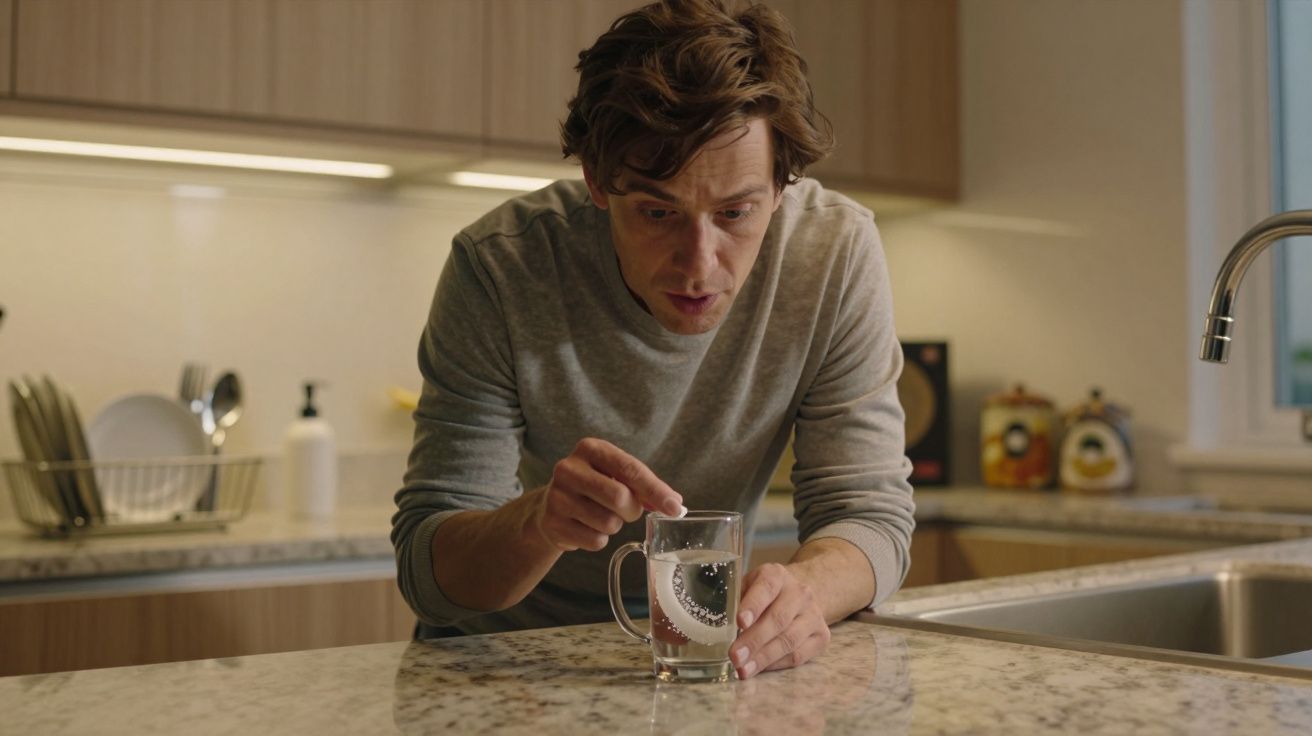
The same chemistry works on the tannin film lining your mug. Drop a denture tablet into warm water, let it fizz, and the solution releases oxygen that gently attacks the brown layer. No scouring pads, no gritty pastes.
How to do it, step by step
- Fill the stained mug with warm (not boiling) water.
- Drop in one denture-cleaning tablet.
- Let it fizz for 15–30 minutes; for heavy staining, leave it for up to an hour.
- Pour away the solution and rinse the mug thoroughly with clean water.
- Wipe with a soft cloth or sponge. Most or all of the stain should lift with minimal rubbing.
For old, deeply set stains, you may need a second round. Once the mug is back to its original colour, normal washing-up usually keeps it looking fresh, as long as you do not let tea sit and cool in the bottom day after day.
Denture tablets are designed to be gentle on dental materials and enamel, which makes them a natural fit for ceramic glazes.
Why dentists like this method
From a dental point of view, stain removal is always a balance between effectiveness and surface protection. Scratching tooth enamel or veneers makes future staining worse, not better. The same principle applies to mugs.
Denture tablets work chemically rather than mechanically. They:
- Avoid scratching the glaze, which helps prevent future staining.
- Require little effort, useful if you have several mugs to revive.
- Are inexpensive and easy to store under the sink.
- Are designed for items that go into the mouth, so they are formulated to rinse away cleanly when used correctly.
Dentists also tend to favour solutions that do one simple thing well. In practice, a weekly soak for your most-used mugs can keep them looking presentable, much as people soak retainers or night guards overnight.
Other gentle options – and what to avoid
If you do not have denture tablets to hand, a couple of other mild methods can help, provided you use them sparingly and rinse well.
Mild alternatives
Bicarbonate of soda paste
Make a loose paste with water, apply to the stain and rub gently with a soft cloth or non-scratch sponge. Rinse thoroughly.Diluted oxygen-based laundry stain remover
Check the label for suitability on coloured fabrics and avoid products with added bleach or fragrance. Use a small amount in warm water, soak the mug, then wash and rinse very well.Soaking straight after use
Simply filling the mug with hot, soapy water as soon as you have finished a drink can stop tannins getting a firm hold.
Methods dentists would be wary of
Dentists see daily what too much abrasion or harsh chemicals can do to enamel. Mugs are more forgiving, but similar cautions apply.
- Metal scourers or very rough pads can leave visible scratches and a permanently dull finish.
- Abrasive cream cleaners used regularly may thin coloured glazes over time, leaving patchy, matte areas.
- Straight household bleach will certainly whiten stains, but it is overkill for a mug, unpleasant to handle, and must be rinsed extremely thoroughly. It should never be mixed with other cleaners.
If a cleaning method would worry you on your teeth, veneers or retainers, think twice before using it repeatedly on your crockery.
Keeping mugs brighter for longer
Once you have rescued a stained favourite, a few small habits can delay the next deep clean.
- Rinse the mug with hot water soon after finishing tea, rather than letting dregs dry.
- Give it a quick wash instead of leaving it on the desk overnight.
- In hard-water areas, occasionally descale your kettle and mugs to reduce the mineral film that helps tannins stick.
- Consider a brief denture-tablet soak every week or two for the mugs you use most.
These measures do not add much to your routine, but they reduce how often you need to reach for special cleaners.
FAQ:
- Will denture tablets damage patterned or coloured mugs? Most standard ceramic and porcelain mugs, including patterned ones, tolerate denture-tablet soaks well. Test on the inside first if you are worried about delicate metallic or hand-painted details, and avoid very long soaks on items marked “hand wash only”.
- Is this safe for stainless steel travel mugs? Many stainless-steel flasks and travel cups can handle denture tablets, but check the manufacturer’s care instructions. Rinse thoroughly and wash with washing-up liquid afterwards to remove any residue.
- Can I use whitening toothpaste on my mugs? Whitening toothpastes rely on fine abrasives. In a pinch, a small amount on a soft cloth can lift light stains, but repeated use may dull the glaze. Denture tablets or bicarbonate of soda are better long-term options.






Comments (0)
No comments yet. Be the first to comment!
Leave a Comment