A Tuesday night, somewhere between clearing the plates and putting the kettle on, you open the kitchen bin and get hit by that sweet‑sour wall of smell. The bag is only half full. You’ve double‑wrapped the chicken tray. The lid was closed. Still, the whole corner of the room now smells like bin day in July. You tie a knot, drag the bag out early and tell yourself it’s just one of those weeks.
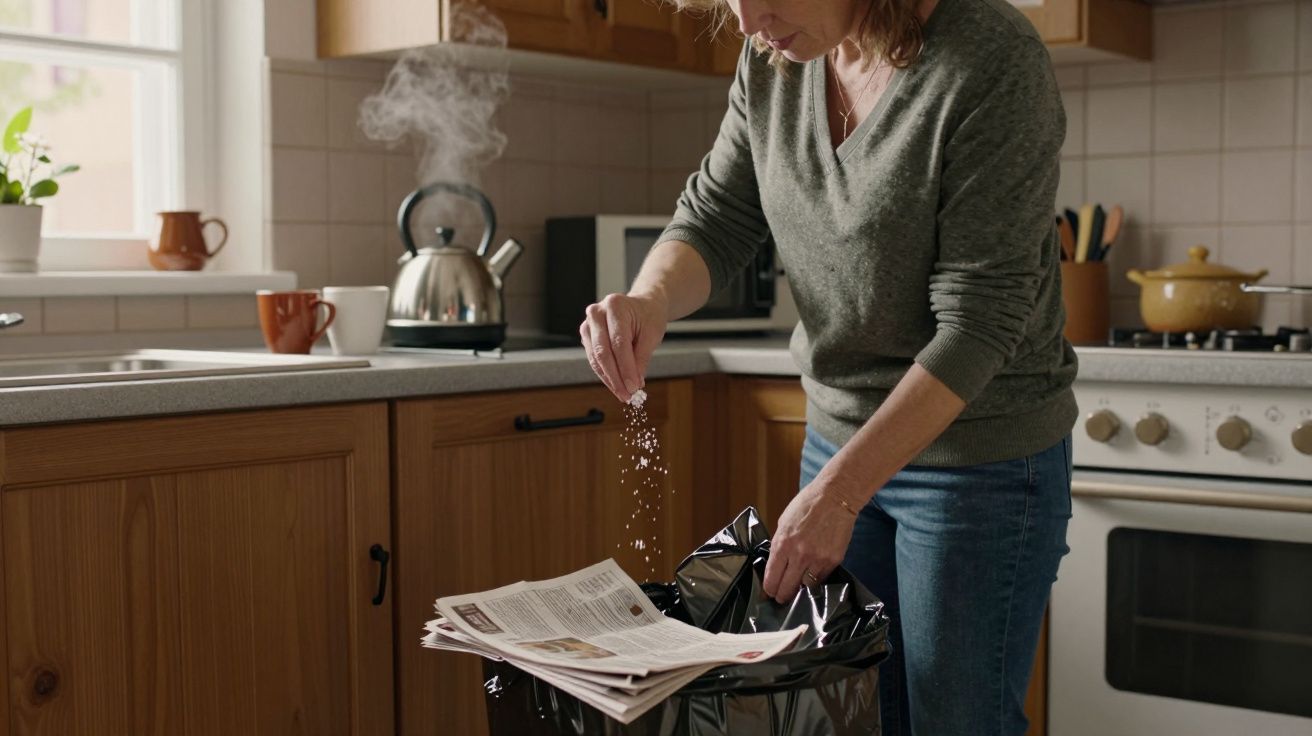
A few streets away, a cleaner doing three houses a day is standing over the same style of pedal bin. She doesn’t flinch. Lid up, bag out, quick check, and then the part most people never see: she lines the base with yesterday’s paper, scatters a thin layer of table salt, presses a new bag in and is gone before the kettle’s boiled. By Friday, her clients notice that their bins just… don’t smell, even when the weather warms up.
Professional cleaners will tell you the secret isn’t a fancy deodoriser or a constant stream of fragranced bin liners. It’s stopping the rot and the leak at the very bottom, where soggy food juices collect and quietly turn into a science experiment. That’s where the newspaper‑and‑salt trick comes in: cheap, quick, unglamorous - and surprisingly effective.
Why your bin smells by mid‑week (even when you’re “careful”)
Kitchen bins live in the perfect micro‑climate for odours: warmish room, lid that traps humidity, and a constant supply of food scraps. Even if most things are wrapped, tiny tears in the liner or condensation cause liquids to pool at the base. Once the bag shifts, that liquid escapes and coats the actual bin.
Bacteria love this. They break down the food residues and release gases that your nose registers as “the bin needs to go out now”. It’s not just meat; onion skins, coffee grounds and fruit peel all contribute. By Wednesday or Thursday, you’ve essentially created a small, sealed compost bay inside your kitchen - but without the airflow that would keep smells in check.
Add summer temperatures or under‑sink placement with poor ventilation, and the problem doubles. Fragranced bin bags and sprays can mask the smell for a while, but they rarely deal with the real issue: damp, contaminated liquid sitting at the bottom, feeding bacteria 24/7.
The newspaper and salt method, in one glance
The idea is simple: keep the base of the bin dry and hostile to the slimy layer where odours start. Professional cleaners do this with two things most homes already have: newspaper and ordinary table salt.
The newspaper acts like a disposable sponge. It absorbs any leaks or condensation that escape the bag, holding them in the fibres instead of letting them spread over the hard plastic. The salt then draws out extra moisture and creates a less friendly environment for odour‑causing bacteria.
Used together, they turn the bottom of your bin into a dry, sacrificial layer you can throw away with each bag. Less standing liquid means slower bacterial growth, fewer gases, and a bin that smells neutral rather than aggressively “used”.
Step‑by‑step: how to set up your bin so it stops smelling
You don’t need to wait for a deep‑clean day. The next time you change the bag, do this.
Empty and wipe.
Take out the old bag. If there’s visible grime or liquid, rinse the bin with hot, soapy water, then dry thoroughly. Odour control starts with a clean, dry surface.Lay the newspaper.
Open out 3–4 full sheets of newspaper (not glossy magazine pages) and fold to fit the base of the bin. You want a few layers, covering right to the edges. Press them flat so they don’t bunch up.Add a layer of salt.
Sprinkle a thin, even layer of table salt over the newspaper - roughly 2–3 tablespoons for a standard kitchen bin. You’re aiming for a light dusting, not a salt bed.Optional: boost with bicarbonate of soda.
If your bin is prone to strong odours, mix a spoonful of bicarbonate of soda (baking soda) with the salt before you scatter it. It helps neutralise acids and odours without adding fragrance.Fit the bin bag snugly.
Pop in your liner, pushing it gently so it sits firmly on top of the salted newspaper. Tie or hook the top so it doesn’t slip down as it fills. A bag that stays in place leaks less.Refresh on every change.
When you remove a full bag, lift out the newspaper–salt layer as well. Any dried leaks go with it. A quick wipe if needed, fresh paper, fresh salt, new bag. Thirty seconds, massive difference.
What cleaners know that most of us miss
The trick isn’t just the paper and salt. It’s the rhythm. Professional cleaners treat the bin base like a consumable, not a permanent fixture. Every bag change is a mini reset, rather than waiting until the smell forces a full scrub.
They also manage what goes in. Strong odours - fish, raw meat packaging, onion and garlic skins - either get wrapped tighter (in a smaller bag or leftover bread bag) or go straight into an outside bin or council food‑waste caddy. Less exposure inside means less to control later.
Finally, they think about air. A bin wedged tightly in a cupboard with no airflow will trap humidity and intensify smells. Leaving the cupboard door ajar for an hour after a bag change, or choosing a spot with a little air circulation, quietly helps.
Common bin odour problems and quick fixes
| Problem | What to change | Why it helps |
|---|---|---|
| Smell appears after 2–3 days | Add newspaper + salt; change bag more often in hot weather | Cuts down on damp build‑up and bacterial growth time |
| Bin smells even when empty | Deep‑clean with hot soapy water, then wipe with white vinegar and dry fully | Removes residue film and neutralises lingering odours |
| Leaks at the bottom of the bag | Use slightly thicker liners and don’t over‑pack; double‑bag very wet waste | Prevents punctures that feed liquid to the bin base |
If you’re still fighting smells after trying the newspaper trick, look beyond the bin itself. Check the surrounding cupboard, the floor underneath and nearby skirting boards. Leaks can travel and sit unnoticed, especially on laminate and tiled floors where odours cling to grout.
Rescue plan: if your bin already stinks
When a bin has hit “open it and regret it” status, the fix needs to be firmer than a quick wipe.
Start by taking it outside if you can. Remove the bag and old paper, then fill the bin a third of the way with very hot water and washing‑up liquid. Swish, scrub the corners and lid, then pour it all away. Follow with a rinse and a final wipe‑down using a solution of equal parts white vinegar and warm water.
Leave the bin to dry completely - preferably in the sun or near a window. Dry plastic smells far less than damp plastic. Once bone‑dry, set up your newspaper and salt layer, add a new bag, and commit to the “little and often” routine. It’s the daily habit that keeps you out of rescue‑plan territory.
Small tweaks that make a big difference
A few low‑effort shifts amplify the newspaper and salt method:
- Keep food waste separate where possible. Use your council food caddy for peelings and scraps; your main bin will stay drier and less smelly.
- Cool hot food before binning. Steam adds condensation inside the bag, feeding the very dampness you’re trying to avoid.
- Avoid strong fragrances in the bin. They can mix oddly with food smells. Neutral control (salt, bicarb, vinegar) is more effective than overpowering them with perfume.
- Match bin size to your household. A giant bin that takes a week to fill will always smell worse than a smaller one you empty more often.
None of these are dramatic. Together, they turn the bin from a weekly headache into a background appliance that just… does its job without announcing itself.
Key points to remember
- Dry base, less smell. Newspaper plus salt soaks up leaks and makes life harder for odour‑causing bacteria.
- Every bag change is a mini reset. Swap the paper and salt each time - it takes seconds.
- Clean, then prevent. A proper wash and dry, followed by the newspaper trick, lasts far longer than air freshener alone.
FAQ:
- Will any paper work, or does it have to be newspaper? Plain newsprint is best because it’s absorbent and thin. Glossy magazine pages and coated leaflets don’t soak up moisture as well, so they’re less effective.
- Can I use rock salt or sea salt instead of table salt? You can, but fine table salt spreads more evenly and covers more surface area, which is what you want for moisture control. There’s no need for anything fancy.
- Is this trick safe for pets and children? Yes, as long as they’re not playing with the bin. The salt and paper sit underneath the liner and don’t come into contact with food or hands in normal use.
- How often should I deep‑clean the actual bin? For most households, a proper wash every 2–4 weeks is enough if you’re using the newspaper‑and‑salt method and changing bags regularly. In very hot weather or with lots of raw food waste, weekly is wiser.
- Will this get rid of flies and maggots too? It helps by keeping things drier - flies prefer damp, exposed food waste - but it’s not a complete solution. For fly issues, empty the bin more often, keep the lid closed, and move the smelliest waste to an outside bin or food caddy quickly.



Comments (0)
No comments yet. Be the first to comment!
Leave a Comment