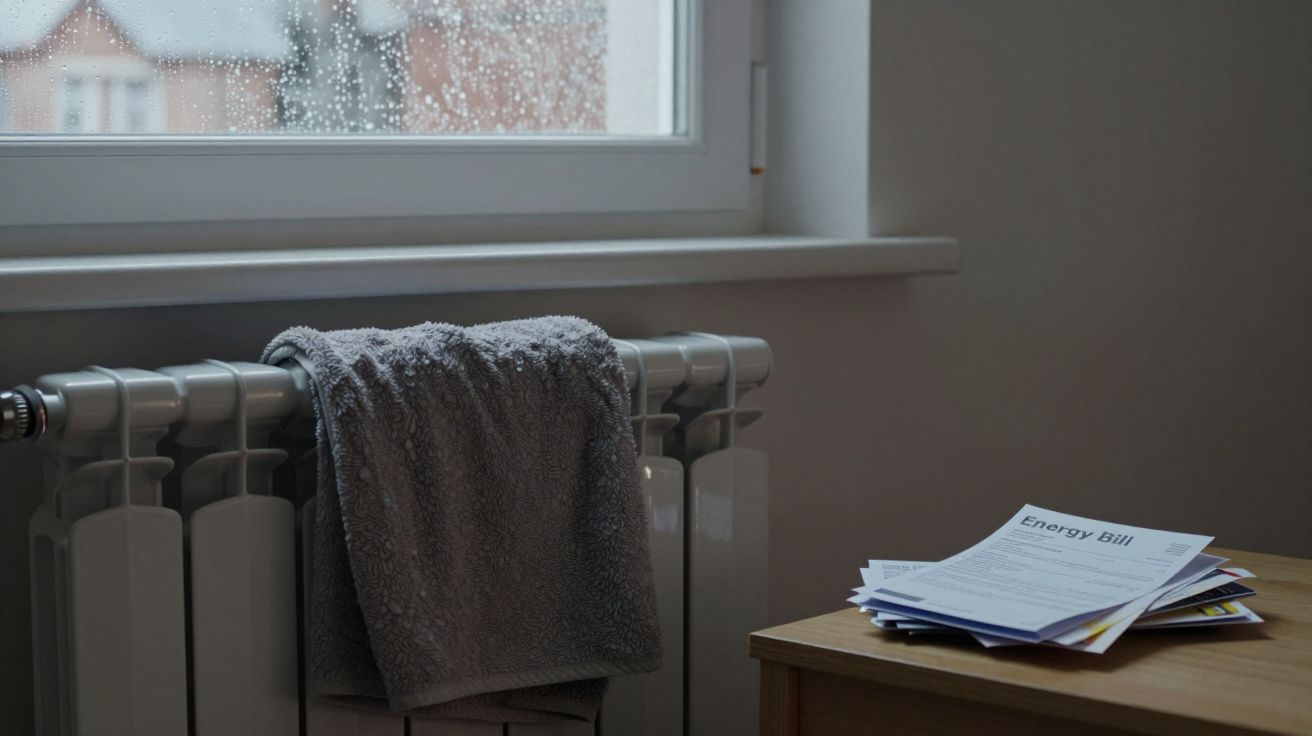
Steam curls gently from a hot radiator, a damp towel slung over it like a flag of domestic victory. School kits are ready for the morning, the bathroom’s finally empty, and for a moment it feels like you’ve hacked the British climate. Towels dry, house warms, job done.
Then the gas bill lands, black-and-white proof that something in your winter routine is quietly working against you. When heating engineers walk into homes at this time of year, they say they can often spot the culprit before they even see the boiler: radiators smothered in laundry.
Behind that cosy image sits a mess of hidden costs - in energy, in damp, and in the life of your heating system. And the experts are almost unanimous: there is a better place in your home to dry those towels. Several, in fact.
What really happens when you cover a radiator with towels
Radiators are not just hot metal shelves. They are designed to heat a room by a mix of radiant heat and convection - cool air comes in at the bottom, warms up as it passes the metal, then rises to circulate around the space. When you plaster towels across the front, that air loop is strangled.
The towel soaks up a lot of the heat before it ever reaches the room. The bit of heat that does escape struggles to move, trapped behind thick, damp fabric. From the sofa, it might still feel warm if you’re sat near the blocked radiator, but the rest of the room lags behind.
Your boiler and thermostat, meanwhile, only see the result: a space that’s stubbornly cooler than it should be. The boiler runs longer, pumps harder, and often cycles more frequently trying to hit the set temperature. All so your towels can dry a little faster.
“If you turn your radiators into drying racks, you’re effectively paying to heat your washing first and your room second,” notes one Northumberland heating engineer. “We see rooms 1–2 °C colder just because the rads are buried under towels and clothes.”
The hidden cost on your energy bill and boiler
The hit to efficiency doesn’t always look dramatic in a single evening. It creeps up over a whole heating season.
Engineers describe three main ways towel-draped radiators quietly waste money:
Reduced heat output
Covering a radiator can knock 10–30 % off the useful heat it gives the room, depending on how much you block. Your boiler compensates by running longer to deliver the same comfort.Poor boiler efficiency
Modern condensing boilers are most efficient when the water returning from your radiators is cooler, usually below about 55 °C. When a towel traps heat at the radiator surface, the water comes back hotter, and the boiler spends less time in its most efficient “condensing” mode.Thermostats and TRVs fooled
Thermostatic radiator valves (TRVs) buried in damp terry cloth can overheat locally and shut off early, while the rest of the room still feels chilly. Wall thermostats in other rooms then push the system to run longer anyway, creating an odd, uneven warmth that never feels quite right.
On paper, the extra fuel use might be “only” a few per cent. Over a winter, energy advisers estimate that regularly blocking radiators with laundry can add £40–£80 to a typical gas bill in a three‑bed semi - money you never planned to spend.
The damp you don’t see (until the paint bubbles)
Every towel or load of washing you dry indoors doesn’t just vanish into thin air; it becomes the thin air. A single damp bath sheet can release more than a litre of water into your home as it dries. Spread across several radiators, that is a lot of moisture looking for a cold surface.
The worst place for that moisture to be generated is right under your windowsills and on external walls - exactly where most radiators live. Warm, wet air rises off the towel, hits the colder glass and masonry above, and condenses.
Over weeks and months, heating engineers and damp specialists see the same pattern:
- black mould blooming on silicone around window frames
- wallpaper lifting around radiators
- paint blistering on chimney breasts and external walls
- musty smells that never quite clear, even on dry days
It isn’t just cosmetic. High indoor humidity can worsen asthma and allergies, and long‑term mould problems are far more expensive to fix than a few loads in a tumble dryer or a small dehumidifier.
In other words: the “free” drying you think you’re getting from your radiators can easily turn into a damp bill of its own - new paint, anti‑mould treatments, extra ventilation work.
Why towels on radiators can make rooms feel colder, not warmer
There’s a psychological trick at play. If you brush past a hot towel on a radiator, it feels toasty. But step into the middle of the room and check the thermometer: often it’s sitting lower than you expect for the thermostat setting.
Engineers point to three reasons:
The heat is localised
You warm the micro‑climate directly above and in front of the radiator, but starve the rest of the room of airflow. Corners and seating areas stay cooler.Furniture absorbs, your body complains
Sofas, curtains and even carpets can absorb the moisture and softer heat coming off a towel‑covered radiator. You end up with slightly clammy fabrics and that “chilled to the bone” feeling despite the boiler working hard.You turn the thermostat up
Because it doesn’t feel quite warm enough, many people nudge the thermostat from, say, 19 °C to 21 °C. Each extra degree on the thermostat can add around 5–10 % to heating costs. Suddenly, that shortcut with the towels isn’t saving you anything.
The better spots in your home, according to heating engineers
Drying towels indoors is often unavoidable in a British winter. The trick is to use the heat you’re already paying for without suffocating your radiators. Engineers and energy advisers tend to recommend a similar hierarchy of “good, better, best” spots.
| Drying spot | What happens | Overall verdict |
|---|---|---|
| Draped directly on radiator | Blocks heat, adds damp at the coldest wall | Avoid where possible |
| On an airer near a radiator | Uses room warmth, leaves radiator free | Decent compromise |
| In a ventilated, dedicated drying space | Warm enough, moisture managed | Best for bills and walls |
1. An airer near, not on, the radiator
Place a folding airer 30–60 cm in front of a working radiator, rather than on it. The radiator can still circulate warm air around the room, which then flows through the towels.
- Leave a clear gap behind the airer so warm air can rise freely.
- Aim a small, low‑wattage fan across the room if you have one; movement of air speeds drying dramatically, without overheating the boiler.
2. Over the bath with the extractor on
Bathrooms are designed to deal with moisture. If you’ve got a decent extractor fan:
- Hang towels on a rail or airer over the bath, not on the radiator.
- Run the extractor on boost for 20–30 minutes to pull humid air out.
- Keep the bathroom door mostly closed while drying, then open briefly to let fresh air circulate.
This keeps condensation in a room that’s meant to get damp, rather than spreading it throughout the house.
3. A spare room with a cracked window and closed door
If you’re lucky enough to have a box room or spare bedroom:
- Put an airer in the middle of the room, away from external walls.
- Keep the door mostly shut to contain moisture.
- Open a window on the latch for a short period, especially if you can’t use an extractor elsewhere.
It might feel wrong to let heat “escape”, but in practice a quick burst of ventilation with the heating already on can cost less than letting humidity roam and condense throughout the home.
4. Heated towel rails and electric airers
Where budget allows, many engineers quietly recommend low‑wattage electric drying options for households that constantly battle piles of laundry:
- Heated electric airers (typically 200–300 W) can dry a load for far less than a full tumble‑dryer cycle and don’t choke central‑heating radiators.
- Electric towel rails with timers give you warm towels in the bathroom without interfering with the main heating circuit, especially in homes with combi boilers.
Used sensibly - on timers and not as permanent background heaters - they can be a lower‑cost, lower‑damp way to stay on top of family laundry.
How to dry towels faster without wrecking your heating
The place you dry towels is only half the story. Small tweaks before they ever hit the airer can halve drying time.
Use the highest sensible spin speed
A 1400–1600 rpm spin removes far more water than a 1000 rpm one. That’s moisture you’re not paying to evaporate into your living room.Shake and separate
Give towels a good snap when they come out of the machine to loosen fibres. On the airer, avoid double‑folding them over bars; two thinner layers dry far quicker than one thick one.Don’t stack everything on one day
Spreading loads across the week stops your home from turning into a makeshift steam room every Sunday afternoon.Use a dehumidifier where you can
A modest‑sized dehumidifier in a dedicated drying room can cost pennies per hour, yet strip out litres of water, easing the strain on both your heating system and your walls.
Let’s be honest: very few households will swear off radiator‑drying forever. The difference is between the odd emergency towel on a chilly night and a winter‑long habit that your boiler and paintwork are paying for.
Rule of thumb from the trade: “Radiators are for heating rooms. Clothes horses are for heating towels.” Use one to protect the other.
Simple checks to stop your radiators becoming laundry lines
If you want a quick health‑check for your heating this week, engineers suggest a five‑minute walk‑round:
- Are any radiators completely hidden by towels or clothes? Strip them back.
- Can you feel warm air rising freely above each radiator, or is it hitting fabric?
- Do any rooms feel cooler despite radiators being on full? Check for blocked TRVs.
- Is there visible condensation above radiators in the morning? That’s a sign of over‑drying indoors.
- Could one small room become your main drying zone, with a window cracked and door mostly shut?
Tiny adjustments here can pay back quietly all winter - in lower bills, warmer rooms, and walls that don’t need repainting come spring.
FAQ:
- Is it ever OK to put a towel on a radiator? In a pinch, yes - especially if it’s just one small towel and only for a short time. The real problem is turning every radiator into a permanent drying rack, day after day.
- Does this apply to all types of radiators? Standard panel radiators and convectors are most affected because they rely heavily on airflow. Old cast‑iron radiators suffer less in performance terms, but you still add moisture to the room.
- What about using a tumble dryer instead - isn’t that expensive? A modern, efficient dryer used for heavy items like towels can sometimes work out cheaper overall than weeks of extra boiler run‑time and potential damp damage. Mixing approaches - part‑drying on a line or airer, then finishing in the dryer - often gives the best balance.
- Will a smart thermostat solve this on its own? Smart controls can optimise run‑times, but they can’t overcome radiators being physically blocked. For them to work well, heat still needs a clear path into the room.
- How can I tell if indoor drying is causing damp problems? Look for persistent condensation on windows, mould spots near radiators, or a musty smell that lingers. If you see any of these, cut back on radiator‑drying, improve ventilation, and consider a dehumidifier or professional damp advice.




Comments (0)
No comments yet. Be the first to comment!
Leave a Comment