
The small sound under the sink that changes everything
It usually starts as a tiny tick, a faint patter on plastic or the soft slap of a drip into an old washing‑up bowl. You notice it when you’re putting the recycling away or reaching for the bin bags. You wipe it, you tighten something by hand, you tell yourself you’ll “keep an eye on it”.
Life is busy. The school run, the emails, the late train. A few drops on a cupboard base feel like nothing compared with everything else demanding your attention. The pipe isn’t spraying, the tap still works, you can’t see water on the floor. So the door closes, and the drip carries on in the dark.
Plumbers see what happens next.
“Most of the big kitchen floods we go to started with what the customer called ‘a tiny weep’ months earlier,” one London plumber told me. “The part to fix it is usually under a pound. The damage on the other hand…”
The quiet drip that keeps turning into a major bill
Insurance companies and plumbers across the UK keep reporting the same pattern. A slow leak under a sink, toilet or bath goes unchecked for weeks. By the time someone realises what’s happening, the water has already crept into cupboards, flooring and, in flats, the ceiling below.
Under the kitchen sink is a perfect hiding place. Pipes sit tight against the back, the waste trap is tucked low, and bottles, bags and cleaning products block your view. You might only open that cupboard properly once or twice a week.
From the outside, everything still looks fine. Underneath, chipboard swells, the veneer bubbles, mould blooms behind plinths, and joints in laminate or wooden floors begin to lift. One loose washer can quietly involve:
- replacement of units or flooring
- drying machines running for days
- redecorating ceilings downstairs
- days off work to let trades in
A drip that could have been stopped with a 50p washer at the weekend can easily pass £1,000 once flooring, units and decorating join the list.
How a 50p washer becomes a £1,000 problem
Most modern kitchen sinks have several points where a tiny rubber or fibre washer does a big job. Over time, they harden, crack or get compressed until they can no longer form a perfect seal.
Common leak points under a sink include:
- the connection between tap and flexible hoses
- compression fittings on copper or plastic pipes
- the plastic nut holding the waste to the sink
- rubber seals on the U‑bend or bottle trap
- dishwasher or washing machine hose connections
At first, the leak is often just a damp ring around a fitting or a drip every few minutes. Water lands on:
- the base of the cupboard (usually chipboard)
- the back panel
- the underside of the worktop around the sink cut‑out
Chipboard behaves badly with water. It soaks it up, swells and loses strength. The laminate on top starts to lift, screw fixings loosen, and once the surface breaks, water can track further and faster. It doesn’t need to be a visible puddle; a slowly soaked board will fail all the same.
If the unit sits on a wooden or laminate floor, water reaches the edges and seeps under. In flats and houses with ceilings below, it can track along joists before finally showing as a brown patch far from the original leak.
By the time you see a stain on the ceiling below, the drip that caused it has usually been going on for weeks.
The two‑minute cupboard check plumbers wish everyone did
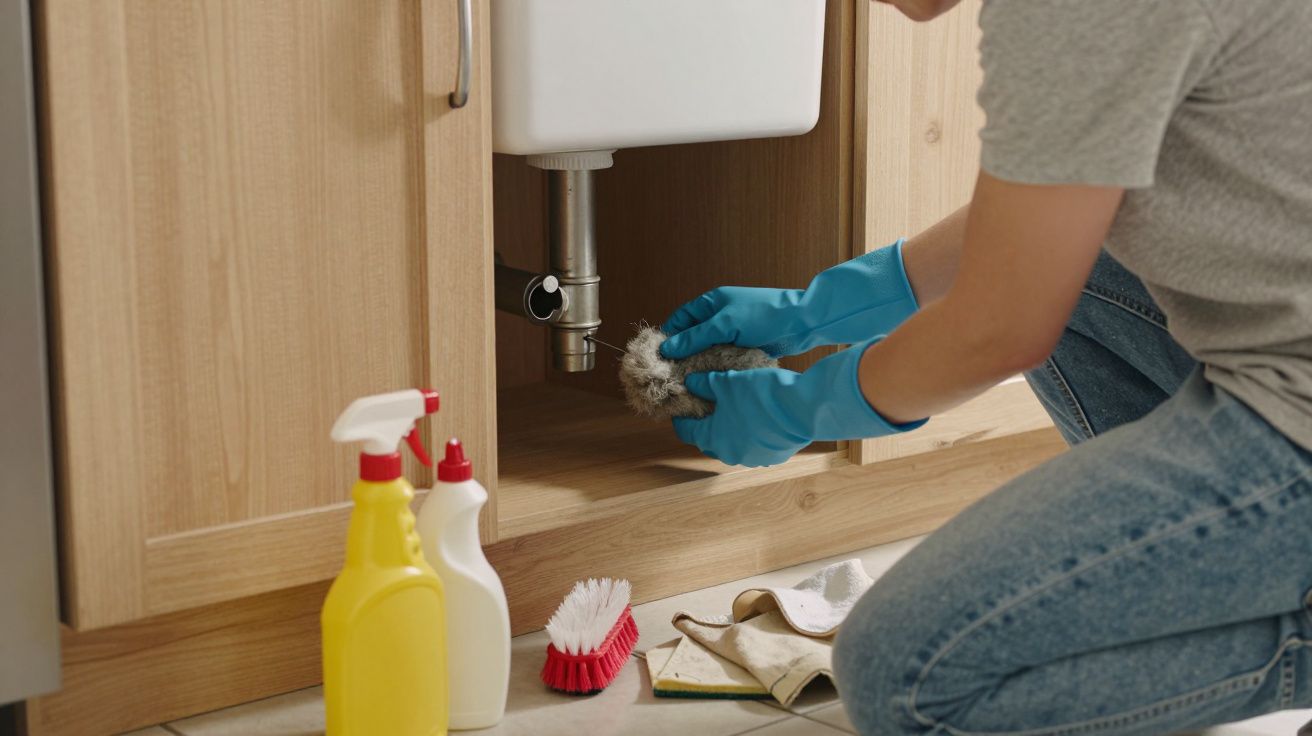
You don’t need to become a plumbing expert. A simple two‑minute routine once a month catches most problems long before they turn expensive.
Your quick check under the kitchen sink
Once a month (or any time you notice a new noise or musty smell):
- empty just the front row of bottles or bags
- run the tap on hot and cold for 30–60 seconds
- with your hand, feel:
- the base of the cupboard, especially the corners
- around visible pipe joints and the waste trap
- underneath the tap where the flexible hoses connect
- look for:
- beads of water on fittings
- white or green crust on metal joints (sign of weeping)
- swollen, flaking or darkened wood
- a musty or “old socks” smell
If you find even slight dampness where it should be dry, treat it as a job for this week, not “sometime”. Dry it, put a tray or towel down, and either tackle the washer yourself (if you’re comfortable) or book a plumber while it’s still routine work.
The time between “I first noticed a bit of damp” and “now I have to rip the whole thing out” is usually measured in weeks, not years.
Small warning signs that should make you pause
Some signals are easy to shrug off on a busy day. Plumbers see them as bright red flags.
| Sign | Why it matters |
|---|---|
| Swollen or spongy cupboard base | Long‑term seepage into chipboard; unit may already be compromised |
| Black spots or fuzzy patches at the back | Early mould growth; often means persistent moisture |
| Peeling laminate or bubbled veneer near the sink | Water has got underneath; worktop or doors may start breaking down |
| A drip only when you use hot water or only when you drain the sink | Strong hint a specific joint or trap washer is failing |
None of these mean you’re at fault. They do mean the problem is already a stage beyond “maybe”. Acting now keeps you on the right side of the £1,000 line.
The 50p parts quietly doing most of the work
Under almost every dripping joint sits a small circle of rubber, plastic or fibre. It’s the washer or O‑ring, compressed between two hard surfaces to stop water escaping. When it gives up, the metal or plastic around it is often still fine.
Typical low‑cost parts that fail first:
- Tap O‑rings – small rubber rings on the spout or where the tap body meets the base
- Fibre washers – flat, reddish‑brown circles inside many tap and appliance connections
- Trap seals – black or grey rubber rings between the sections of a plastic U‑bend
In many cases, the fix is:
- Turn off the water supply (ideally at the local isolation valves, otherwise at the stopcock).
- Loosen the fitting carefully.
- Remove the tired washer and replace it with an identical new one.
- Re‑tighten without over‑straining plastic threads.
- Run the tap and check for any sign of moisture.
If that list made your shoulders tense, it’s a perfectly good reason to call a professional. The point is not that you must DIY it, but that the part and labour are simple if you don’t wait for the damage to spread.
“I charge the same for changing a washer whether the cupboard is dry or rotten,” one installer said. “The difference is whether you then pay a carpenter, a floor fitter and a decorator on top.”
Simple habits that protect your kitchen (and downstairs neighbour)
Tiny tweaks in how you use and look after your kitchen make leaks far less likely to turn serious.
Everyday habits
Know your stopcock
Make sure everyone in the household knows where the main shut‑off valve is and how to turn it.Use a tray under the sink
A cheap plastic tray or cut‑down storage box under pipes catches the first drips and makes them obvious.Don’t over‑tighten plastic fittings
Crushing plastic threads or washers can distort them and cause the very leaks you’re trying to prevent.Check after changes
Any time a new dishwasher, washing machine or tap is fitted, run it and then check all visible joints for the next day or two.Keep the cupboard breathable
Over‑packed under‑sink cupboards trap damp and hide problems. Leave a bit of space around pipes and the back panel.
These habits don’t make leaks impossible. They make “silent and expensive” far less likely.
What to do if the drip has already done damage
If you open the cupboard and find real wetness or swelling, deal with it in two tracks: stop the water, then deal with the damage.
Stop or slow the leak
- Turn off local isolation valves if you have them.
- If not, turn off the main stopcock.
- Put a bowl or tray under the leak and move anything absorbent (bags, boxes) out.
- Turn off local isolation valves if you have them.
Call a plumber before you call a decorator
There’s little point painting a ceiling or replacing a cupboard if the leak is active or the pipework is still questionable.Document the scene
Take clear photos of:- the leak itself
- any damaged units, flooring or ceilings
This helps if you later speak to your insurer.
Start gentle drying
Once the leak is fixed, open doors, pull off plinths if possible, and use fans or dehumidifiers. Trapped moisture is what leads to mould and smells.
If you’re in a flat and any water has reached a neighbour’s ceiling, speak to them and, if relevant, building management as soon as you can. Early honesty is easier than a surprise brown patch over their dining table next month.
Why “it’s only a drip” costs more than you think
A minor leak doesn’t just threaten your cupboards. It chips away at things you rarely count at first: time off work to wait for trades, the stress of arguing with insurers about what is and isn’t covered, the hassle of living with dehumidifiers humming for days.
Plumbers and insurers see the same moral every week: the cheapest time to fix a leak is when it still feels slightly over‑cautious to call it a problem.
A 50p washer, a ten‑minute check and a mildly inconvenient call this week beat a £1,000 “how did it come to this?” conversation in three months’ time.
The habit to build is small: open the cupboard, look, feel, and act when something is off. You don’t need perfect DIY skills. You just need to stop telling yourself that a drip is nothing. It isn’t-and it doesn’t have to become everything.
FAQ:
- Is every drip under the sink an emergency? Not usually, but every unexplained damp patch is a sign something isn’t quite right. Treat it as a priority for this week rather than a crisis for tonight, unless water is running freely.
- Can I always fix a leak myself with a washer? No. If pipes are corroded, fittings cracked or you’re unsure where the water is coming from, it’s safer to use a qualified plumber. Washers help when a sound joint has simply lost its seal.
- Will my home insurance cover leak damage? Many policies cover sudden escape of water but may be stricter about gradual, unnoticed leaks. Fixing the actual plumbing fault is often your responsibility. Check your policy and keep good records.




Comments (0)
No comments yet. Be the first to comment!
Leave a Comment