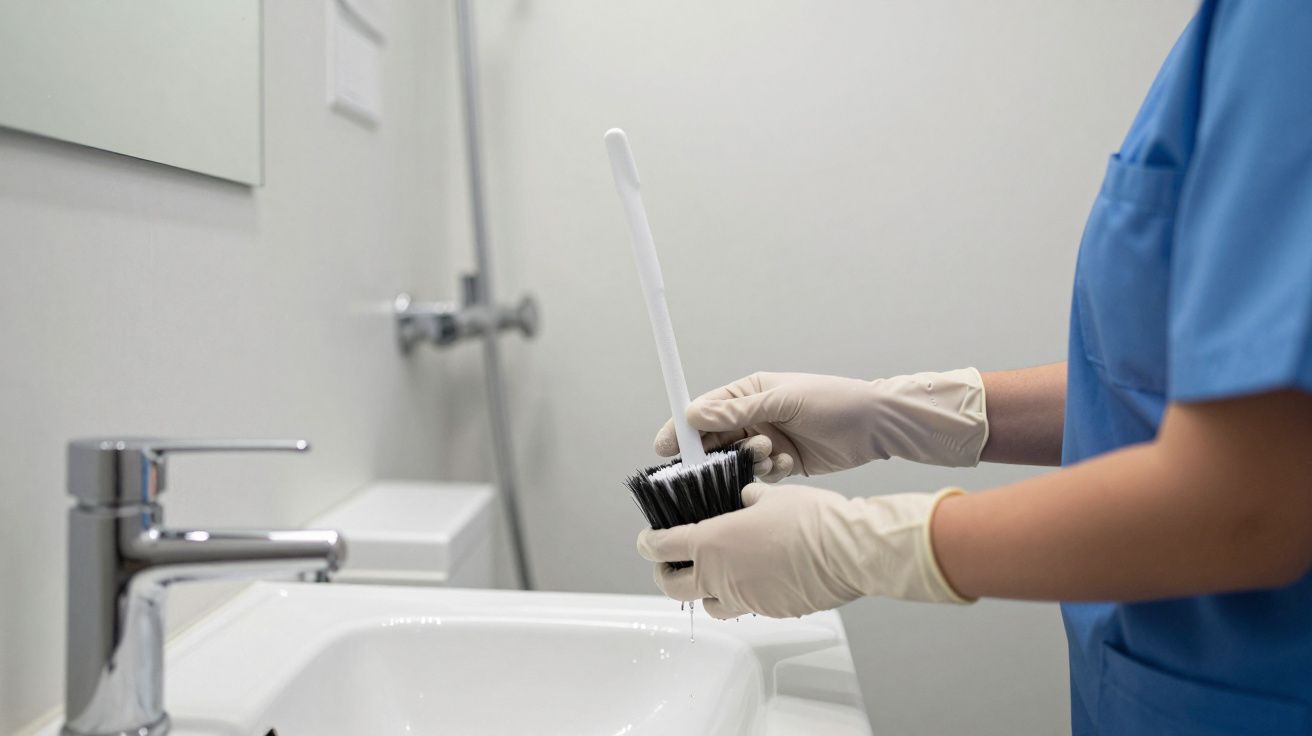
The first time an infection control nurse watched me tidy a bathroom, she didn’t look at the taps or the tiles. She went straight for the loo brush. Gloves on, holder tipped, bristles lifted. A thin ribbon of brown water slid back into the pot with a quiet splash. She didn’t flinch, just raised an eyebrow and said, “You know this is the germiest thing in here, right? And you’re keeping it in a cup.”
Most of us treat the toilet brush like a background extra: you buy one when you move in, park it by the pan, and forget about it until there’s something to scrub. It doesn’t beep when it’s overdue, it doesn’t come with a manual, and it definitely doesn’t shout when it’s harbouring last winter’s stomach bug. It just sits there, damp and patient.
Here’s the uncomfortable truth infection control nurses will tell you in a heartbeat: a loo brush is not a lifetime purchase. Used the way most people use it, it quietly becomes a reservoir of faecal bacteria and viruses. And unless you clean and replace it on purpose, every “quick swish” is a little re-contamination tour around your toilet bowl.
The biofilm you can’t see (and why nurses care)
Flush with the lid up, scrub a bit, drop the brush back into a dark, wet holder, and you’ve set the stage. Tiny droplets from the bowl land on the bristles, bacteria settle in, and a slimy biofilm starts to build along the fibres and metal core. It doesn’t need to look obviously filthy to be loaded.
“In hospital bathrooms we don’t even allow shared toilet brushes,” says Emma L., an infection prevention nurse who trains new ward staff. “If we used them the way people do at home, we’d be spreading C. diff and norovirus from patient to patient all day. The same principles apply in your flat, just on a smaller scale.”
The main culprits are gut bacteria such as E. coli and enterococci, plus viruses that cause diarrhoea and vomiting. They love damp, shaded plastic. A brush that never properly dries can keep them going for days, sometimes longer. Add splashback from repeated scrubbing and you’ve got a tool that’s dirtier than the surface you’re “cleaning”.
It’s not about scaremongering; it’s about breaking the chain. Infection control nurses think in links: contaminated surface, dirty tool, next surface, next person. Your loo brush is one of those links.
How often should you really replace your loo brush?
Most people assume “when it falls apart” or “when I move house.” Infection control nurses are blunter.
“If a toilet brush in a family home is older than a year, I’d bet money it’s carrying something you don’t want,” says Sarah K., an NHS infection control nurse. “Most should be going in the bin far sooner than that.”
A simple rule of thumb, if you clean the brush properly (we’ll get to that):
- Busy household (3+ people, daily use): replace the brush every 3–4 months.
- Smaller or less-used loo: replace every 6 months.
- After a bout of diarrhoea or vomiting (norovirus, food poisoning, “tummy bug”): replace immediately once everyone is well.
- Any time the brush smells, is stained, or the bristles are splayed: don’t argue with it; bin and replace.
And yes, the holder counts too. If the inside is visibly stained or scratched, or smells even once it’s been scrubbed and disinfected, replace it with the brush. A scratched plastic pot is almost impossible to sanitise properly.
If you prefer not to think about it at all, some nurses quietly recommend a calendar trick: buy a basic brush and holder every season when you rotate your duvet. Four times a year, old one out, new one in, no drama.
Make the one you have less disgusting
Replacement is only half the story. The other half is not letting your current brush turn into a petri dish in slow motion. Infection control nurses use a simple sequence: flush smart, scrub, disinfect, dry, store.
Here’s a home version that doesn’t feel like a lab exercise:
Flush with the lid down.
Before and after you use the brush, so you’re not spraying the room.Scrub with product already in the bowl.
Squirt loo cleaner or bleach into the bowl first, let it sit a minute, then use the brush. You want the bristles working in contact with chemicals, not just water.Disinfect the brush straight away.
- After scrubbing, flush once more while holding the brush in the clean water to rinse loose debris.
- Pour a small amount of bleach solution (check the bottle for dilution guidance) into the bowl or a separate container and swish the brush through it for 5–10 minutes.
- Never mix bleach with other cleaners, especially anything acidic (like limescale remover) or ammonia-based.
- After scrubbing, flush once more while holding the brush in the clean water to rinse loose debris.
Let it drip and dry.
- Trap the handle under the seat so the brush hangs over the bowl to drip dry for at least 30–60 minutes.
- The goal is “nearly dry” before it goes back in a holder. Germs struggle on dry plastic; they thrive in a pool.
- Trap the handle under the seat so the brush hangs over the bowl to drip dry for at least 30–60 minutes.
Wipe and disinfect the holder weekly.
- Empty any liquid, scrub with hot soapy water, then follow with a bathroom disinfectant or diluted bleach.
- Rinse, dry, then return the brush.
- Empty any liquid, scrub with hot soapy water, then follow with a bathroom disinfectant or diluted bleach.
Let’s be honest: nobody does all of that every single flush. Aim for a proper brush-and-holder disinfect once a week, and every time someone in the house has had a stomach bug.
Common mistakes that quietly make things worse
- Putting the brush away soaking wet in a closed pot.
- Storing it pressed up against the toilet or the bathroom bin.
- Letting children play with it during “helping with cleaning” games.
- Using it to scrub anything other than the inside of the toilet bowl (tiles, grout, the cat’s tray). Once that happens, it’s a bin job, not a rinse.
A simple upgrade that many nurses like is a ventilated holder that allows air to circulate, or a design where the brush hangs rather than sits in a pool.
When to bin it without a second thought
Visual cues still matter. If you wouldn’t touch it with a gloved hand in a hospital, it doesn’t belong in your bathroom either.
| Sign on the brush or holder | What it usually means | What to do |
|---|---|---|
| Brown or grey staining that won’t scrub off | Biofilm and set-in contamination | Replace brush (and holder if stained) |
| Bristles splayed, bent, or missing | Less effective cleaning, more splashback | Replace brush; consider a better-quality head |
| Persistent bad odour even after soaking | Organic residue deep in the core | Replace entire set |
| Rust on metal parts | Micro-scratches and crevices for germs | Replace; choose coated or plastic core next time |
If in doubt, throw it out. A basic new brush costs less than a takeaway coffee; a bout of norovirus costs you days.
Choosing a brush nurses actually like
You don’t need a designer set, but a few features make infection control easier:
- Removable or replaceable heads so you can swap just the bristles every few months.
- Simple shapes without decorative grooves where grime can hide.
- Ventilated holder that doesn’t trap a puddle at the bottom.
- Silicone bristles can shed debris more easily and dry faster, but you still need to disinfect and replace them regularly.
“We’re not asking people to turn their loo into a theatre-standard clean room,” says Emma L. “We just want the basics-dry brush, regular disinfectant, and a bin nearby when it’s past its best.”
Build it into an existing habit: payday, change the toothbrushes and check the loo brush. If it smells, looks stained, or you can’t remember when you bought it, you’ve just answered your own question.
A humble, boring swap and a five-minute weekly routine won’t make your bathroom look wildly different, but it quietly cuts down germs where they matter most. The next time you reach for that brush, you’ll know it’s on your side, not working against you.
FAQ:
- Can I put my loo brush in the dishwasher or washing machine?
Infection control nurses strongly advise against it. You risk contaminating the inside of the machine and anything washed afterwards. It’s safer to disinfect with bleach in the toilet or a dedicated bucket, then replace the brush regularly.- What if I don’t want to use bleach?
You can use a bathroom disinfectant labelled as effective against bacteria and viruses, following the contact time on the bottle. Hot soapy water alone removes some grime but won’t reliably kill the germs that cause stomach bugs.- Are silicone toilet brushes more hygienic?
They don’t absorb water, dry faster, and shed debris more easily, which is helpful. But they still collect germs, still need weekly disinfection, and still need replacing every few months.- Should I have a separate brush for each toilet?
Yes. Sharing one brush between bathrooms increases the chance of spreading germs from one loo (and one person) to another.- Is it really necessary to close the lid before flushing?
It won’t remove all risk, but it does reduce the amount of microscopic spray from the bowl landing on your brush, floor, and toothbrushes. Infection control teams consider it a simple, worthwhile habit.





Comments (0)
No comments yet. Be the first to comment!
Leave a Comment