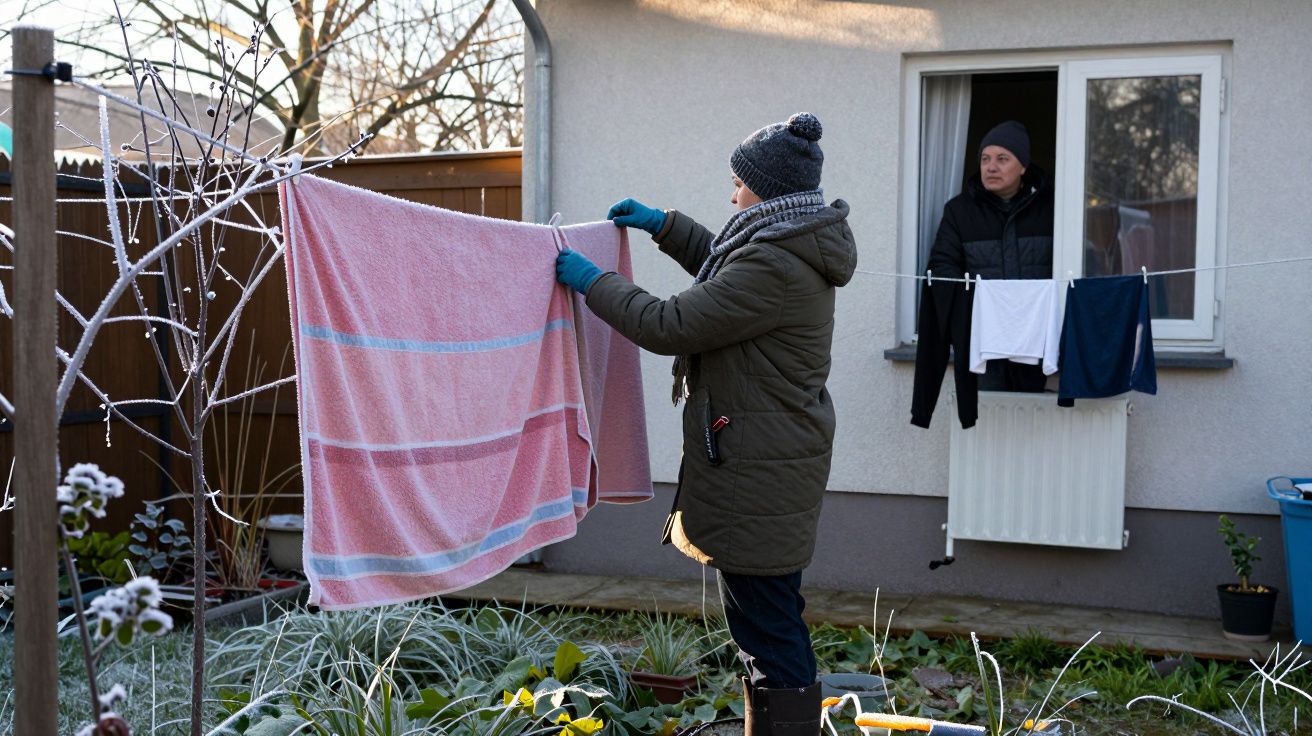
The first frosts have just whitened the grass and someone on a semi‑detached street in Leeds is hanging up T‑shirts in a thick jumper and fingerless gloves. Pegs click against the line, a breath ghosts in the air, and a neighbour peeks through the kitchen blind, baffled. “In this weather?” they mutter, turning back to the clothes horse propped against the radiator.
On local Facebook groups and WhatsApp chats, the pattern repeats. One camp swears by heated airers and towel‑warm radiators. The other insists that “my nan dried outside all year, it’s fine”. Between them sits a quieter voice that rarely makes the meme rounds: respiratory specialists who see the indoor consequences of wet laundry, day in, day out.
The idea that winter line‑drying could be better for your lungs feels counter‑intuitive. Outside is cold and damp, inside is warm and “cosy”. Yet when doctors measure humidity, mould spores and dust mite levels, a different story emerges. According to respiratory clinicians, that odd‑looking washing line in January can, in some homes, be a small but real health intervention.
It isn’t about being hardy for the sake of it. It’s about where several litres of water from each load of laundry end up: in the open air, or in your bedroom walls.
Why respiratory specialists care where your socks dry
Most of us think about drying laundry in terms of time and energy bills. Specialists in asthma and chronic lung disease add a third dimension: indoor air.
Hang a typical washing machine load on a clothes horse in a small flat and you can release the equivalent of two to three litres of water into the room. The air feels a bit “heavy”, windows mist, maybe a faint musty smell appears. For doctors, that mist is the start of a familiar chain: condensation, damp patches, mould spores and irritated airways.
“We routinely see patients whose asthma or COPD worsens over winter,” notes one UK respiratory consultant. “Indoor damp and mould from drying clothes are very common background factors.”
When that same load dries outdoors, even partially, the moisture mostly disperses into the open air rather than settling on cold corners or behind wardrobes. Clothing may come back cool to the touch and not quite cupboard‑dry, but the bulk of the water has gone somewhere your lungs don’t have to process it.
Indoor drying: invisible humidity, visible symptoms
Drying clothes inside is not automatically “bad”. In a well‑ventilated, roomy home with good extraction and perhaps a dehumidifier, the extra moisture can be handled. The issue is how many British homes are neither roomy nor perfectly ventilated.
Small flats, converted lofts and tightly sealed new builds trap water vapour. Radiators lined with jeans and towels turn into low‑tech humidifiers. Over time, that excess moisture settles out on colder surfaces: external walls, window frames, the back of furniture. That is exactly where mould, and the dust mites that love humid conditions, thrive.
For people with sensitive lungs, the resulting cocktail is not abstract.
- Asthma sufferers can experience more frequent wheeze, night‑time coughing and chest tightness.
- Those with COPD may find winter infections hit harder in already damp homes.
- Children in mould‑prone rooms show higher rates of respiratory symptoms in several UK and European studies.
Indoor drying also concentrates the scents and volatile compounds from detergents and fabric softeners. What smells “fresh” to one person can be an irritant to someone else’s airways. Outdoors, those compounds disperse; indoors, they linger around beds, sofas and play spaces.
The overlooked upside of winter line‑drying
The little‑known benefit, then, is not that cold air magically cleans your clothes. It is that using the outdoor air as your drying room reduces the moisture and chemical load your indoor air has to absorb.
On a dry, breezy winter’s day, laundry can dry surprisingly well, even if temperatures hover just above freezing. Evaporation still happens; on very cold days, ice can even sublimate straight to vapour. Your washing may take hours instead of minutes, but every hour outside is an hour when your living room isn’t acting as a damp box.
Respiratory specialists point to several linked advantages:
- Lower indoor humidity peaks after washing days, especially in small homes.
- Less mould growth in typical hot‑spot areas like window reveals and external corners.
- Reduced dust mite levels in bedding and upholstered furniture over the long term.
- Less exposure to strong laundry fragrances in bedrooms and nurseries.
For someone with asthma sleeping in a small room, simply not drying a full load on a radiator in that space can make a tangible difference over a damp winter.
And there is a simple middle ground that doctors often suggest: even if laundry cannot fully dry outdoors, giving it a few hours outside before finishing on an indoor rack slashes how much moisture ends up in the house.
How to line‑dry in winter without making life harder
None of this means standing in the garden during sleet, pegging socks in a head torch. It means using whatever outdoor or semi‑outdoor space you do have a little more deliberately.
Start with the basics:
- Pick your days. Cold and dry with a bit of wind will beat mild and drizzly. Even a few hours outside on a dry window helps.
- Use a strong spin cycle. The drier clothes are when they leave the machine, the less time they need anywhere.
- Maximise airflow. Don’t bunch items; spread them out on the line or airer so air can move around them.
- Accept “almost dry”. Bringing clothes in slightly cool and finishing them on an indoor rack, away from bedrooms, still keeps a lot of moisture outdoors.
If you’re in a flat, the “outdoors” might be:
- A small balcony with a fold‑down rack.
- A sheltered communal line in a courtyard.
- A covered area by a back door, with a rotary line or airer.
When outdoor drying really isn’t possible, respiratory teams often suggest treating laundry like cooking steam: keep it contained and vented.
- Dry in one room if you can, with the door closed and a window slightly open, or a dehumidifier running.
- Avoid draping clothes directly over radiators in bedrooms or on external walls.
- Leave a gap between racks and walls to reduce cold‑surface condensation.
- Wipe down window frames where condensation gathers, rather than letting it drip into wood or plaster.
Small tweaks that help sensitive lungs
For households where someone has asthma, COPD or chronic sinus issues, a few extra habits can add protection:
- Prioritise drying bedding and towels outdoors, even in winter, as they hold the most moisture.
- Skip heavily perfumed fabric softeners if you must dry indoors.
- Check regularly behind wardrobes and under window sills for early signs of mould and treat promptly.
- Talk with your GP or asthma nurse if symptoms worsen in winter; mentioning home drying habits gives them useful context.
| Key point | Detail | Why it matters |
|---|---|---|
| Outdoor winter drying | Even partial line‑drying removes litres of water from the indoor environment | Less indoor damp, mould and dust mite growth |
| Indoor drying management | One room, window ajar or dehumidifier, no radiators in bedrooms | Reduces humidity spikes where people sleep |
| Laundry products | Mild detergents, lighter fragrance, good rinse cycle | Fewer irritant fumes in closed winter homes |
What this small habit changes in real life
Seen from the pavement, a winter washing line looks like old‑fashioned thrift. From a clinic, it looks like one of many modest choices that nudge a home towards easier breathing.
No one is claiming that pegging out jumpers will cure asthma or replace proper ventilation and medical treatment. But when respiratory teams talk about “controlling the indoor environment”, they are thinking about everyday routines, not just expensive kit. Where the washing dries is high on that list.
The deeper shift is psychological. Hanging clothes outdoors, even for a few hours, is a reminder that fresh air matters inside as well as out. It pushes back gently against the winter instinct to seal everything and live in a permanent fog of steam.
Between the energy debates, gadget ads and social media hacks, the quiet advice from lung specialists is disarmingly simple: if you can use the sky above your home as a drying room, even in January, your walls and your airways may thank you.
FAQ:
- Do clothes really dry outside in winter in the UK? Yes, on dry or breezy days they will, though more slowly. Even if they don’t get completely dry, time outside still removes a significant amount of moisture before you finish them indoors.
- Is outdoor drying actually better for asthma and other lung conditions? It doesn’t treat the condition, but by reducing indoor damp and mould growth, it can remove common triggers that make symptoms worse, especially in small, poorly ventilated homes.
- What if I don’t have a garden or balcony? Try partial solutions: drying near an open window, using a communal outdoor space where allowed, or combining an indoor airer with a dehumidifier and closing the door to that room.
- Should I worry about pollution or pollen on outdoor‑dried clothes? In high‑pollen seasons, some people with severe allergies find indoor drying better. In winter, pollen is usually low; on days with visible pollution or smoke, you may prefer to dry inside with extra ventilation.
- Are heated airers or tumble dryers “bad” for lungs? They are not harmful in themselves; the issue is unmanaged moisture. Used with good ventilation or a dehumidifier, they can be part of a lung‑friendly routine, especially if outdoor drying isn’t an option.



Comments (0)
No comments yet. Be the first to comment!
Leave a Comment