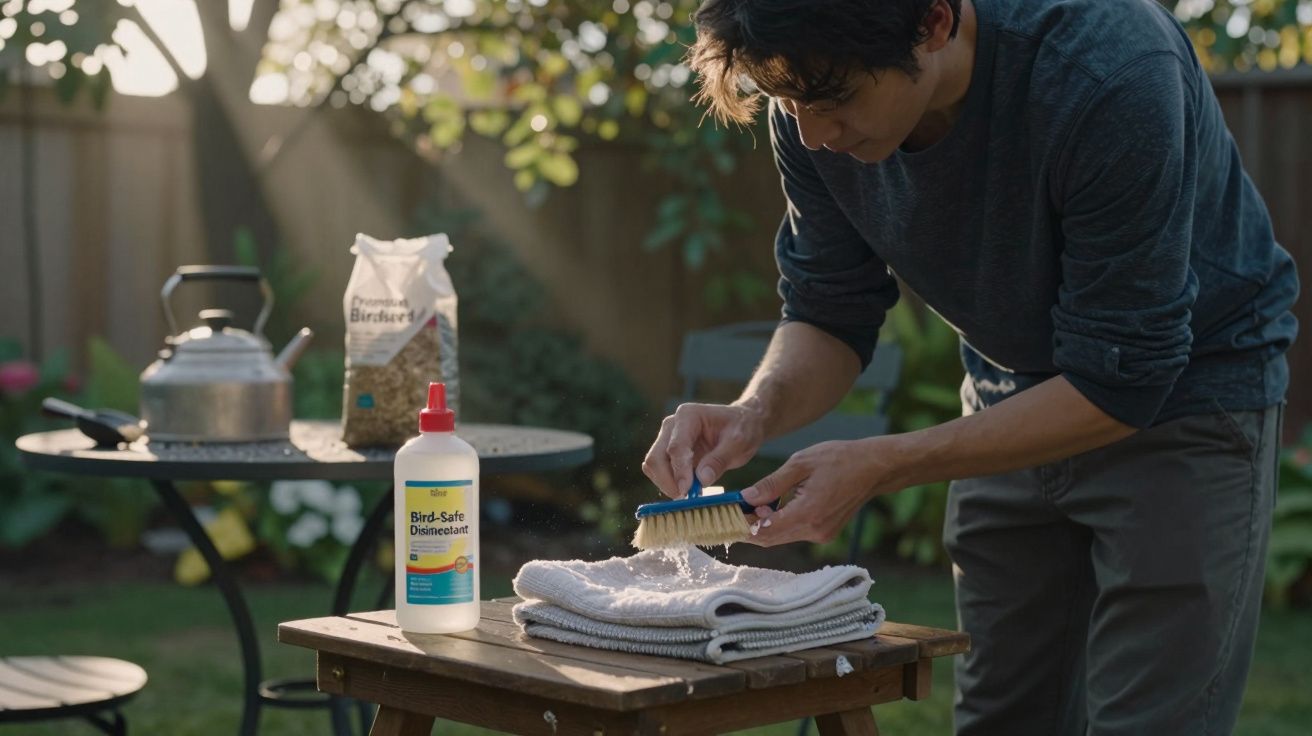
Dawn light, a kettle on, the soft clatter of seeds in a scoop. You hang the feeder back on its hook and feel that small glow of satisfaction that comes from looking after “your” robins, tits and finches. It feels like the most harmless, wholesome thing you do all week.
And yet there is a quiet problem building up on that perch and tray, day after day, refill after refill. Saliva, droppings and damp seeds form an invisible film where dozens of beaks meet. The mistake isn’t feeding birds – it’s how most of us do it.
We top up instead of emptying. We rinse instead of properly disinfecting. We forget that for birds, a busy feeder is as intimate as sharing a toothbrush.
The common mistake turning feeders into infection hotspots
In British gardens, the same scene plays out everywhere: the feeder runs low, you pop outside with a bag of seed, pour more in and walk away. The old food stays at the bottom, a bit clumped, slightly damp, but “still fine”. The perches and ports look used, but not filthy, so you leave them.
This is the mistake: constantly topping up without regularly stripping, cleaning and disinfecting the feeder. The outside may look clean enough to human eyes, yet for birds it’s a crowded, contaminated canteen.
Every visit leaves microscopic traces of saliva and droppings on:
- perches and feeding ports,
- the rims of seed hoppers and peanut cages,
- the ground directly under the feeder where spilt food gathers.
Add rain, condensation and time, and you have ideal conditions for parasites and bacteria to thrive. Trichomonosis in finches, salmonella and E. coli in garden birds have all been linked to poor feeder hygiene and overcrowded feeding spots.
A well‑meant top‑up, done over and over without cleaning, can quietly fuel the very outbreaks that empty your garden of birds.
Why dirty feeders are such a powerful disease spreader
Wild birds meet each other at natural food sources, yet those are usually spread out: a hedge here, a patch of seed heads there. Your feeder does the opposite. It concentrates dozens of birds – often of the same species – onto a few hard surfaces and a small patch of ground.
Close contact is only half the story. The other half is repetition. Sick birds return to the same perches, wipe their beaks on the same edges and drop faeces into the same puddles of spilled seed. Healthy birds then pick through that mix, putting their beaks, eyes and feet into the very places that carry infection.
Common UK garden diseases spread at feeders include:
- Trichomonosis – a parasitic infection hitting finches and doves; birds may look fluffed, lethargic, with trouble swallowing.
- Salmonella and E. coli – bacteria linked to dirty feeders and mouldy food, causing sudden deaths and “puffed up” sick birds.
- Avian pox – wart‑like growths on unfeathered areas, more often spread by biting insects but made worse by stress and crowding.
It doesn’t take a large outbreak to change your garden. One badly affected feeder can wipe out the local greenfinches for years.
The RSPB’s two‑step cleaning routine
The Royal Society for the Protection of Birds (RSPB) recommends a simple, repeatable routine that tackles both dirt and germs. Think of it as a weekly health check for your feeding station.
Step 1: Remove food and scrub with warm soapy water
This step gets rid of visible grime, dried droppings and old food.
- Take the feeder down and empty all remaining food into the bin (not the compost).
- Disassemble it as far as the design allows – remove bases, lids and trays.
- Using warm water and washing‑up liquid, scrub all surfaces with a stiff brush.
- Rinse thoroughly with clean water to remove soap and loosened debris.
If food is mouldy, caked or smells sour, wear gloves and a mask if you can. Mould spores are not kind to human lungs either.
Step 2: Disinfect, rinse and dry completely
Once the feeder is physically clean, you need to kill off lingering pathogens.
- Soak or wipe all parts with a bird‑safe disinfectant or a mild bleach solution (typically around 1 part household bleach to 20 parts water).
- Leave it for the recommended contact time so it can actually work – a quick splash and rinse is not enough.
- Rinse very thoroughly with clean water to remove all traces of disinfectant.
- Allow everything to dry completely before refilling and rehanging.
Drying matters. Damp crevices are exactly where bacteria bounce back. If the weather is poor, leave feeders indoors to dry overnight.
Two steps, once a week: scrub the dirt, then disinfect the surfaces. That’s the RSPB’s core recipe for a safe feeder.
How often to clean – and when to stop feeding
A lot of confusion comes from timing. People wait until a feeder “looks dirty”. By then, the damage may already be done.
The RSPB’s broad advice is:
- Routine: clean and disinfect feeders and bird tables at least once a week.
- Busy sites: in peak periods (cold snaps, migration) or if many birds use your garden, clean every few days.
- Outbreaks: if you see sick or dead birds, take feeders and tables down entirely for at least two weeks, clean thoroughly and let birds disperse.
Warning signs to watch for include:
- birds sitting fluffed up, reluctant to fly, or lingering with eyes half‑closed,
- difficulty swallowing, food dropping from the beak, or saliva around the bill,
- obvious swellings, growths or crusts on the head and legs,
- several dead birds of the same species in a short span of time.
Stopping feeding feels cruel in the moment. Yet temporary closure is often the most effective way to slow disease because it removes the hotspot where infection is being exchanged.
Small changes that make a big difference
The two‑step clean is the backbone, but a few design tweaks to your feeding station can cut risk further without much effort.
Consider these adjustments:
- Spread food out: use several feeders rather than one crowded spot to reduce jostling and stress.
- Move feeders regularly: shift them every couple of weeks so droppings and spilt seed don’t build up on one patch of soil.
- Rake underneath: clear shells and soggy food from the ground beneath feeders; dispose of it in the bin.
- Avoid cheap, dusty mixes: these break down quickly, clog ports and go mouldy faster.
- Do not offer mouldy or stale food “just to use it up”: if you wouldn’t eat it, don’t feed it to wildlife.
If you also have bird baths, treat them with the same seriousness. Standing water mixed with droppings is another fast route for disease, so empty, scrub and refill them with fresh water frequently – daily in summer, several times a week in winter.
Quick guide: what you see, what it might mean, what to do
| What you notice | Possible issue | Action |
|---|---|---|
| Feeder smells sour, seed clumped or sprouting | Damp, mould, bacterial growth | Empty, deep clean with two‑step routine, dry, refill with fresh seed |
| Birds fluffed up, lingering, food stuck in beak | Potential trichomonosis or other illness | Remove feeders, clean thoroughly, pause feeding, report if multiple birds affected |
| Piles of husks and soggy food under feeder | Overcrowding and contamination hotspot | Rake up waste, move feeder, consider extra feeder to spread birds out |
What this means for your garden – and the birds you love
Feeding birds is one of the easiest ways to stay connected to the seasons and the wildlife on your doorstep. It is also one of the places where small habits matter more than grand gestures. You do not need fancy seed blends or designer feeders to help – you need consistency with a brush, a bowl and a bottle of disinfectant.
The good news is that hygiene is highly effective. Clean, well‑managed feeding stations support stronger, more resilient local bird populations. They give fledglings a better start, help winter visitors through harsh spells and reduce the chance that your garden becomes the epicentre of the next finch die‑off in your area.
You can keep the kettle, the seed scoop and that morning ritual. Just add ten minutes once a week for the two‑step clean, and you turn a potential risk into a genuine refuge.
FAQ:
- Do I really need disinfectant, or is hot water enough?
Hot, soapy water removes visible dirt but does not reliably kill parasites and bacteria. The RSPB recommends using a bird‑safe disinfectant or dilute bleach after washing, followed by a thorough rinse and full drying.- Is bleach safe for birds and other wildlife?
Used correctly at low concentration and rinsed off completely, household bleach is an effective, inexpensive disinfectant. Never use it neat, never mix it with other cleaners, and always rinse feeders well and allow them to dry before refilling.- Should I clean feeders more often in summer or winter?
In warm, wet weather, food spoils faster and bacteria multiply quickly, so more frequent cleaning helps. In winter, heavy use during cold spells also justifies extra cleans. Aim for at least weekly year‑round, and increase to every few days in busy periods.- What should I do if I find a dead bird under my feeder?
Wear gloves, place the bird in a double bag and dispose of it with your household rubbish. Remove all feeders and baths, carry out a thorough two‑step clean, and pause feeding for at least two weeks so birds disperse. If several birds of the same species die, consider reporting it to Garden Wildlife Health.- Is it kinder to stop feeding altogether if I’m worried about disease?
Clean, well‑maintained feeders provide real benefits, especially in winter and in urban areas. The key is not to abandon feeding, but to run your feeding station as the RSPB suggests: regular cleaning, sensible numbers of birds, and swift action if you see signs of illness.




Comments (0)
No comments yet. Be the first to comment!
Leave a Comment