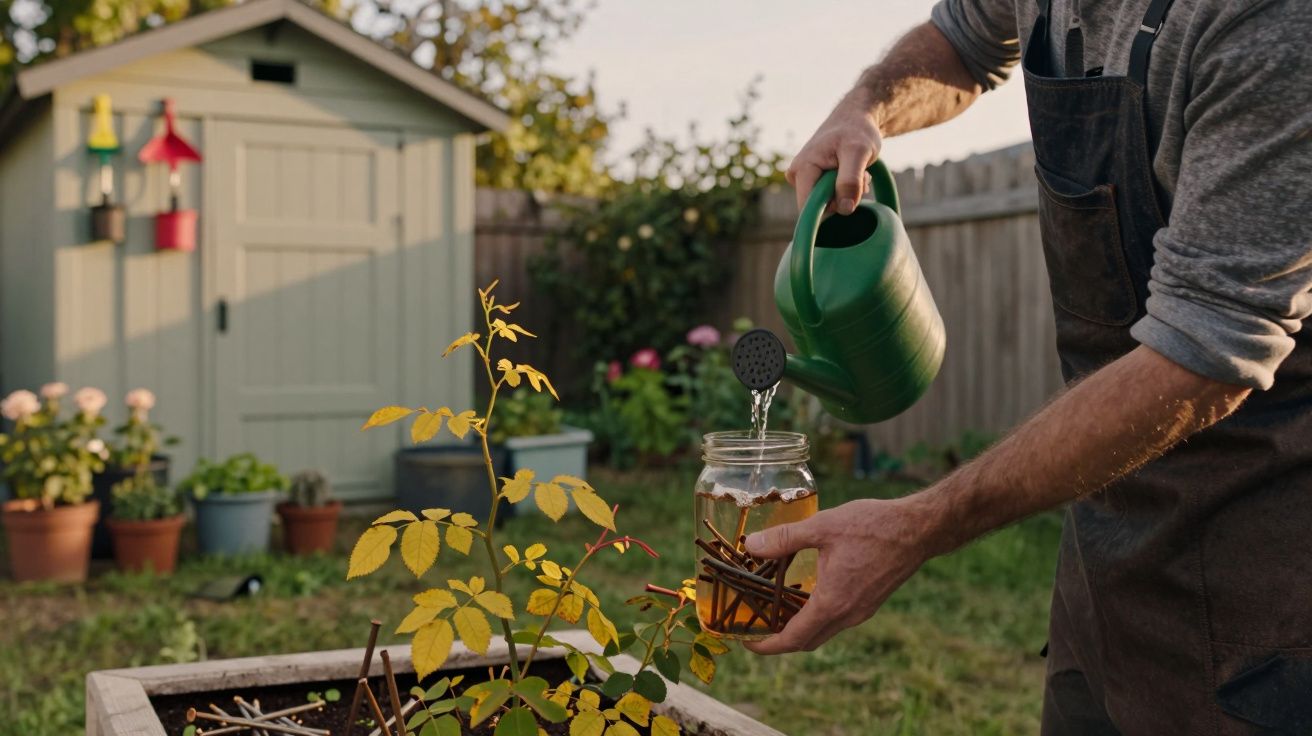
The rose didn’t look sick so much as tired. Leaves that should have been a deep, glossy green had faded to a patchy yellow, the veins clinging to their colour like the last threads in an old jumper. You checked for aphids. You watered. You even tried a splash of feed from a half‑forgotten bottle by the back door. Still, the plant sulked.
Then you remembered your grandfather’s border, the way his roses glowed against a fence that was frankly nothing special. He never talked about “chelates” or pH; he talked about a jam jar in the shed and “a few old nails to put the iron back”. On the bottom shelf, behind dusty string and spare labels, you find it: a cloudy jar, a handful of rusty metal, water the colour of weak tea.
It sounds too simple for a world of specialist feeds and soil tests. Yet the trick has survived in potting sheds for a reason. It’s not magic. It’s chemistry – if you use it with a bit of care.
Why a jar of rusty nails can help yellowing roses
At heart, this old trick is about iron. Roses are hungry plants, and iron is one of the micronutrients they use to make chlorophyll – the green pigment that powers photosynthesis. When the soil is short of available iron, or when roots can’t access it easily, you get iron chlorosis: leaves go pale or yellow, veins stay greener, and growth stalls even if the plant isn’t actually starving for water or major nutrients.
Rust is simply iron that’s oxidised. As nails corrode in water, a small amount of iron dissolves into the liquid. Poured onto the soil in the right dose, that iron can gently top up what roses can draw on, especially in pots or in beds with slightly alkaline soil.
There’s a catch. Iron deficiency is only one reason roses yellow. Overwatering, compacted ground, lack of nitrogen, root damage, black spot, even cold snaps can create similar symptoms. The rusty‑nail cure works only when iron really is the missing piece.
“Treat the jar as a nudge for a plant that’s short on iron, not a miracle fix for every sad rose.”
Think of it as one tool in the shed, not the entire toolkit.
The jam‑jar method, step by step
You don’t need special kit, but you do need patience and a light hand. This is a slow release, not a quick shot.
What you’ll need
- A clean glass jar with a lid (a jam jar is ideal)
- 5–10 plain steel nails or small screws (uncoated, not galvanised or stainless)
- Tap water (rainwater is even better if you have it)
- A label or marker so nobody mistakes it for something drinkable
Making the iron “tea”
- Fill the jar three‑quarters full with water.
- Drop in the nails, making sure they’re completely submerged.
- Loosely screw on the lid to keep insects and curious pets out.
- Leave it somewhere bright but not baking hot, like a shed window or greenhouse bench.
- Wait 1–2 weeks, swirling gently every few days. The water should turn a brownish, rusty tint.
The longer the nails sit, the more they rust. You don’t want a thick sludge; you’re after a mild, rusty solution.
How to use it on your roses
- Dilute first. For most plants, mix roughly 1 part rusty water to 4–5 parts clean water in a watering can. That keeps the iron level gentle.
- Water the soil, not the leaves. Pour slowly around the drip line of the rose (roughly under the outermost leaves), not directly against the stem.
- Start modestly. For a medium shrub rose in the ground, half a 10‑litre watering can is plenty for the first test. For a pot, use less.
- Repeat once a month during the growing season if you see improvement and there are no signs of stress. Top the jar back up with water and leave the nails to rust again between uses.
- Watch for change. New leaves should emerge greener over the following weeks. Existing yellowed leaves rarely “reverse”; it’s the new flush that tells you if it’s working.
Let’s be honest: nobody is out there measuring millilitres in the rain. The key is to stay on the side of “weak and occasional”, not “strong and weekly”.
When this old trick works – and when it doesn’t
Before you reach for the jar, it helps to read what the plant is actually telling you. Yellow is a symptom; the reason for it matters more than the colour itself.
Signs the rusty nail jar may genuinely help
- Leaves are yellow but veins remain distinctly green (classic iron chlorosis).
- The problem shows up mostly on the youngest leaves at the top of the plant first.
- The soil is limey or chalky, or you often see white deposits on pots and paving.
- The rose is in a container that’s been in the same compost for several years.
In these cases, the plant may have enough main nutrients but is struggling to access iron. A gentle iron boost can tip the balance.
Red flags that point elsewhere
- Older leaves at the bottom yellow first, or the whole leaf (veins included) fades: often nitrogen or general nutrient shortage.
- Leaves are yellow and speckled or blotched, or drop with black spots: diseases or pests are more likely.
- Soil is heavy and soggy after rain, or the pot has no drainage hole: roots may be waterlogged or rotting.
- The rose was recently moved or pruned very hard: it might simply be in shock.
In those cases, no amount of rusty water will fix the underlying cause. You’re better off improving drainage, adding compost, feeding with a balanced rose fertiliser, or tackling pests and disease directly.
A quick guide in plain view:
| Symptom pattern | Likely cause | Rusty nail trick useful? |
|---|---|---|
| New leaves yellow, veins green | Iron chlorosis | Often helpful |
| Old leaves yellow first, whole leaf pale | General nutrient lack | Only a minor help at best |
| Yellow leaves with spots, holes or mould | Pests / disease | No – treat problem directly |
Use the jar where it fits. For everything else, reach for more targeted care.
Making it safer, cleaner and a bit more scientific
One reason this trick has a slightly spooky reputation is the idea of simply burying handfuls of nails around roses. It’s easy, yes, but not ideal.
Loose nails and screws can injure bare feet, damage tools and linger long after anyone remembers why they’re there. They also rust very slowly in dry soil, which means the effect is patchy and unpredictable.
A gentler, tidier version:
- Keep the iron in the jar, not scattered through the border.
- If you want a slow‑release option in a bed, put nails in an old mesh bag (like an onion or bulb net), bury the bag shallowly and attach the tie to a cane so you don’t forget it’s there.
- Combine the iron “tea” with good organic matter – compost or well‑rotted manure – so the soil structure, microbes and micronutrients all improve together.
- Avoid overdoing it. Excess iron can interfere with other nutrients, and heavily stained soil around the plant is a sign to stop.
If your roses repeatedly show iron chlorosis, it may be worth stepping up from folklore to slightly more science:
- Test a small patch of soil with a home pH kit. Very alkaline soil makes iron less available; in that case, adding organic matter and, where appropriate, a light dressing of sulphur can help over time.
- For a stubborn problem, a one‑off dose of a shop‑bought chelated iron product is more precise and quicker acting than any jam jar. You can still keep the nails for maintenance.
“Old tricks shine brightest when you pair them with new understanding.”
The aim isn’t to throw out tradition, but to let it sit alongside what we now know about soil and plant health.
A simple rose‑rescue routine that actually fits into real life
Most of us don’t have time for complex feeding schedules and spreadsheets of bloom times. You can tuck the rusty‑nail trick into a modest, repeatable routine that keeps roses on track without turning gardening into homework.
- Once in early spring: Mulch around each rose with compost or well‑rotted manure. This feeds broadly and helps roots breathe.
- Once a month in the growing season: Check leaves. If you see that tell‑tale yellow with green veins, give a diluted dose from your rusty jar instead of immediately reaching for more fertiliser.
- After heavy rain or a heatwave: Inspect the soil. If it’s puddling or cracking, deal with drainage and watering first; the jar can wait.
- Once a year: Tip container roses out, refresh at least the top third of compost and check for circling roots. That often does more than any tonic.
Let’s be honest: nobody follows a perfect calendar. If you remember one thing, make it this – change one condition at a time. Give the plant a chance to respond before you layer on more “cures”.
What this old trick really offers
The pleasure of the jam jar and the rusty nails isn’t just in the chemistry. It’s in the feeling that you’re in conversation with the plant and with a line of gardeners who made do with what they had.
You’re not buying a silver bullet in a bright bottle. You’re watching, noticing, tweaking, trusting that small, consistent steps add up. A rose that greens up over a fortnight because you nudged its iron, improved its soil and eased its waterlogging feels like a quiet, shared victory.
Some days the answer will be a proper soil test, a sharp pair of secateurs and a new bag of compost. Some days it will be a jar on a shelf, staining water the colour of old pennies, waiting for you to pour just enough around a plant that’s asked, not shouted, for help.
When a yellowing rose catches your eye this season, pause. Look at the pattern on the leaf. Feel the soil. Then, if the signs fit, reach for the jam jar. It’s a small, rusty reminder that not every solution has to come with a label and a barcode.
FAQ:
- Is rust actually safe for my garden soil?
In small, diluted amounts, yes. Iron is a natural part of soil, and the quantities from a jar of rusty nails are low. The main risk comes from sharp metal left where feet or tools can meet it, not from the rust itself.- Can I just bury a handful of nails around each rose?
You can, but it’s not the best option. They rust slowly, unevenly and can be hazardous. Using a jar of rusty water or a buried mesh bag you can retrieve later is safer and more controlled.- How long will it take to see an improvement?
If iron deficiency is the issue, you’ll usually see new leaves emerging greener within 2–4 weeks. Old yellow leaves rarely turn fully green again. No change after a month suggests the cause lies elsewhere.- Can this replace proper fertiliser altogether?
No. Rusty water only adds a tiny bit of iron. Roses still need a balanced diet of nitrogen, phosphorus, potassium and other trace elements. Think of the jar as a supplement, not a full meal.- Does the trick work for other plants too?
It can help other iron‑hungry plants that show the same chlorosis pattern – hydrangeas, camellias, some fruit bushes – especially in alkaline soils. Always start with a weak dilution and test on just one plant first.


Comments (0)
No comments yet. Be the first to comment!
Leave a Comment