The first time you hear it, you blame the washing machine. A soft scritch‑scritch in the quiet bit of the evening, somewhere between the kettle and the back door. You pause, listen, then shrug. Old house, you think. Pipes. Plastic bags settling.
Two weeks later, there are crumbs where crumbs shouldn’t be, a nibble in the corner of the dog food bag, and a neat line of what you desperately hope is coffee grounds along the skirting. You finally do the thing you’ve been avoiding: open the cupboard under the sink and really look.
The smell hits you first – damp wood, old cloths, that faint sour note from the food caddy you keep meaning to empty more often. Behind a tangle of carrier bags and spray bottles, there’s a jagged hole around the pipes and a glimpse of daylight. The pest controller arrives, kneels down, moves one bag, then another, and sighs.
“This,” he says, tapping the gap with a gloved finger, “is a mouse motorway. And you’ve kindly carpeted it for them.”
The mistake is boringly common, he tells you. The fix costs about £3 from any hardware shop. But almost nobody does it until they’ve already got company.
The under‑sink mistake mice are quietly banking on
Most of us treat the under‑sink cupboard as the house’s junk drawer. Half‑used cleaning sprays, spare sponges, carrier bags stuffed into other carrier bags, a dish for mystery keys. If there’s a bin inside, there’s usually a tear in the liner and a streak of something sticky on the base.
Somewhere, hidden behind all that, is the real problem: an unsealed hole where pipes, cables or waste outlets pass through the wall or floor. Instead of properly sealing it, we:
- Shove a towel, sponge or old cloth into the gap
- Wedge plastic bags or cardboard around the pipes
- Simply ignore the daylight showing through, because nothing bad has happened yet
To a mouse, that mess is an invitation. The soft stuff is nesting material. The gap is a front door. The food smells above it are a lure. You could not design a better welcome pack if you tried.
The pest controllers you never wanted to meet have a blunt name for it: an access point. Access beats bait every time. Block that, and most of your mouse problems evaporate before they begin.
Why the cupboard under the sink is rodent central
Once someone points it out, it’s obvious. Under the sink has everything a mouse likes and everything you don’t notice.
- Warm pipes and dark corners – a safe, quiet run between rooms
- Drips, condensation and leaks – reliable water source, even in winter
- Food smells from bins, recycling, compost caddies and pet food
- Flexible materials like wood, chipboard and plaster that are easy to gnaw
Mice only need a gap the width of a pencil to squeeze through. That rough notch where the plumber “cut it close” ten years ago? Big enough. The broken bit of foam around the waste pipe? Irresistible.
And when we try to be clever by stuffing fabric or paper into those gaps, we accidentally give them building blocks. They don’t see a draft excluder. They see free bedding.
“If you can fit your little finger in the gap, a mouse will have a go,” one technician told me. “If that gap is hidden behind a bin full of crumbs and carrier bags, they’ve hit the jackpot.”
The £3 fix every pest controller wishes you’d buy
The good news is that the solution is not glamorous, expensive or complicated. It also doesn’t involve filling your house with poison.
What professionals reach for first is usually:
- Wire wool (steel wool) or metal scouring pads – around £3 a pack
- Sometimes paired with a bit of sealant, filler or tape to keep it in place
Mice can chew wood, plastic, foam and even some softer metals. They do not enjoy gnawing through tightly packed wire fibres. It hurts their gums and wears down their teeth. So they tend to give up and try somewhere else.
That’s why “shove a sponge in it” fails, and “shove wire wool in it” works.
You’ll find it in any hardware shop in the cleaning aisle or near the sandpaper, often sold as:
- Steel wool
- Wire wool pads
- Metal scourers
You do not need a deluxe pest‑control kit or an engineer’s toolkit. You need something scratchy and metallic, a pair of gloves, and ten undisturbed minutes.
How to mouse‑proof your under‑sink in 15 minutes
Before you reach for bait or blockbuster traps, do the cheap, dull job that actually stops the traffic.
1. Strip the cupboard completely
Take everything out. All of it. Yes, even the leaky bleach bottle you’re sure you’ll use “one day”.
- Wipe down the base so you can see fresh droppings in future (or, ideally, not see any)
- Take the bin bag out, tie it, and leave it outside for now
- Put carrier bags somewhere else – they don’t belong here anyway
This is the bit everyone skips. Don’t.
2. Hunt the light (and the gnaw marks)
Turn off the cupboard light if you have one. Use your phone torch and look very slowly around:
- The holes where pipes enter the wall or floor
- The back corners and under the baseboard
- Any cracked sealant, broken plaster or crumbling chipboard
You’re looking for:
- Actual holes and gaps
- Signs of chewing – rough edges, shredded wood, gnawed plastic
- Tracks of droppings along an edge or behind pipes
- Smears or rub marks where greasy fur has brushed repeatedly
If you can see daylight around a pipe, that’s a red flag. If you can see outside, that’s basically a welcome mat.
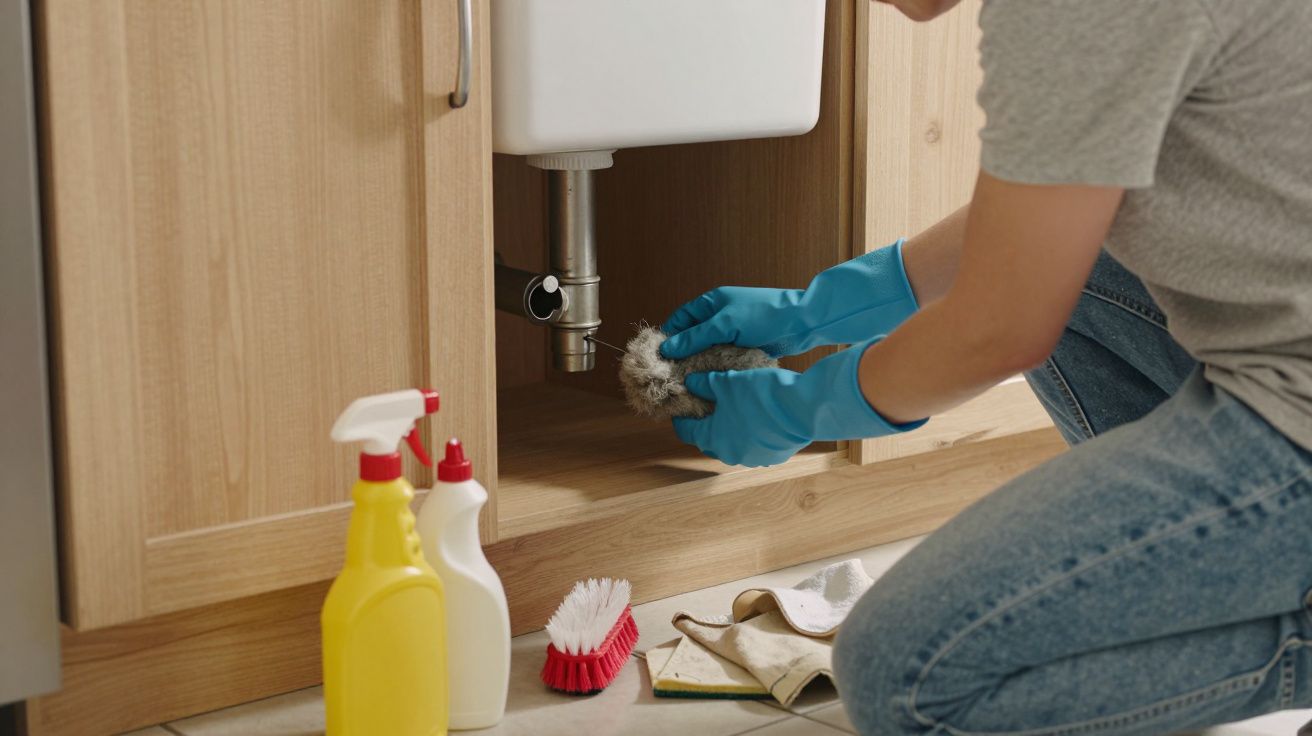
3. Pack gaps with wire wool
Put on gloves – wire fibres are not kind to bare skin.
- Pull off a wad of wire wool and push it firmly into the gap around each pipe
- Use a blunt tool (like the back of a spoon) to ram it in so it’s tight
- For bigger gaps, layer it: stuff, compact, then stuff some more
You want mice to hit a wall of metal, not a token sprinkle.
If you have flexible filler or sealant, you can:
- Add a bead over the top to hold the wool in place
- Smooth it so it seals draughts as well as vermin
If not, tightly packed wool alone is already a huge upgrade from “bare hole”.
4. Move the food and fix the leaks
Even the best barrier is pointless if the cupboard still smells like a buffet.
- Move pet food, bird seed and open packets to sealed tubs or a different cupboard
- Don’t keep compost caddies or food bins directly under the sink if you can avoid it
- Check for slow leaks or drips and get them fixed – mice love a damp patch
You’re trying to make this space boring. Dry, dull, and not worth the risk.
5. Put fewer things back
This is the part future‑you will thank you for.
Only return:
- Essentials you actually use weekly
- Items in solid containers (not chewed cardboard boxes)
- A small, manageable number of bags or cloths
The more clutter, the more hiding places. A half‑empty cupboard shows problems early. A packed one hides them until you’re googling “what does mouse urine smell like?”.
Tiny habits that quietly invite mice in
Mice are opportunists. It’s rarely one dramatic mistake, more like a handful of small “oh, it’ll be fine” choices that slowly add up.
Common under‑sink habits pest controllers quietly hate:
- Letting the bin overflow so the lid can’t shut
- Keeping recycling unwashed, especially cans and pet food pouches
- Storing chocolate, cereal or snacks in thin cardboard on the floor
- Leaving wet cloths, mops or sponges to fester in a corner
- Ignoring a faint musty smell because “it’s just damp”
None of these guarantee a problem. They simply tilt the odds in a mouse’s favour. The £3 fix works best when paired with a handful of low‑effort tweaks:
- Rinse tins and jars before they go into an indoor bin
- Empty food caddies a bit more often than feels strictly necessary
- Give the cupboard a 30‑second check when you change the bin liner
- Treat any new hole or crack as “fill now, not later”
Think of it as routine maintenance, not a crisis response.
What changes when you do the boring fix first
The day after you pack that ragged hole with wire wool, nothing dramatic happens. No fanfare. No cartoon mouse dragging its suitcase down the street.
What does change is quieter:
- The late‑night scritching stops
- New droppings fail to appear
- Your cleaner doesn’t leave a pointed note
- You open the cupboard without bracing yourself
You’ve shifted from chasing symptoms (bait, traps, panic Googling) to fixing the cause (access and attraction). Proof beats poison. If they cannot get in, you do not have to get them out.
Here’s the pattern pest controllers see over and over:
| Problem | Usual reaction | Better first move |
|---|---|---|
| Droppings under sink | Buy traps and bait | Strip cupboard, seal gaps with wire wool |
| Chewed pet food bag | Move it 30cm higher | Move it out and into a sealed tub |
| Occasional scratching | Ignore and hope | Inspect and block access now |
The difference is not heroics. It’s timing.
FAQ:
- Is wire wool really enough to stop mice?
In most small domestic gaps, tightly packed wire wool is a significant deterrent because it’s painful and awkward to chew. For larger holes, pair it with filler or a metal plate. No method is 100 per cent, but this is the standard first line professionals use.- Can I just use expanding foam instead?
On its own, no. Mice will happily chew through dried foam. If you like foam for draught‑proofing, stuff wire wool into the gap first, then foam over the top. Metal to stop teeth, foam to stop air.- Is poison a bad idea?
Rodenticide has its place, but it carries risks for pets, wildlife and children, and dead mice can end up rotting in inaccessible voids. Most councils and reputable pest controllers now stress proofing and hygiene first, bait only if needed and under guidance.- What if I live in a flat and can’t reach all the pipework?
You can still seal your visible gaps under the sink and around skirting. If you suspect mice are using shared risers or lofts, report it to your landlord or management company – building‑level access points are their responsibility.- How often should I check under the sink?
A quick look whenever you change the bin or buy new cleaning supplies is enough. You’re looking for new holes, droppings, or signs of gnawing. The habit takes seconds and catches problems while they’re still cheap to fix.





Comments (0)
No comments yet. Be the first to comment!
Leave a Comment