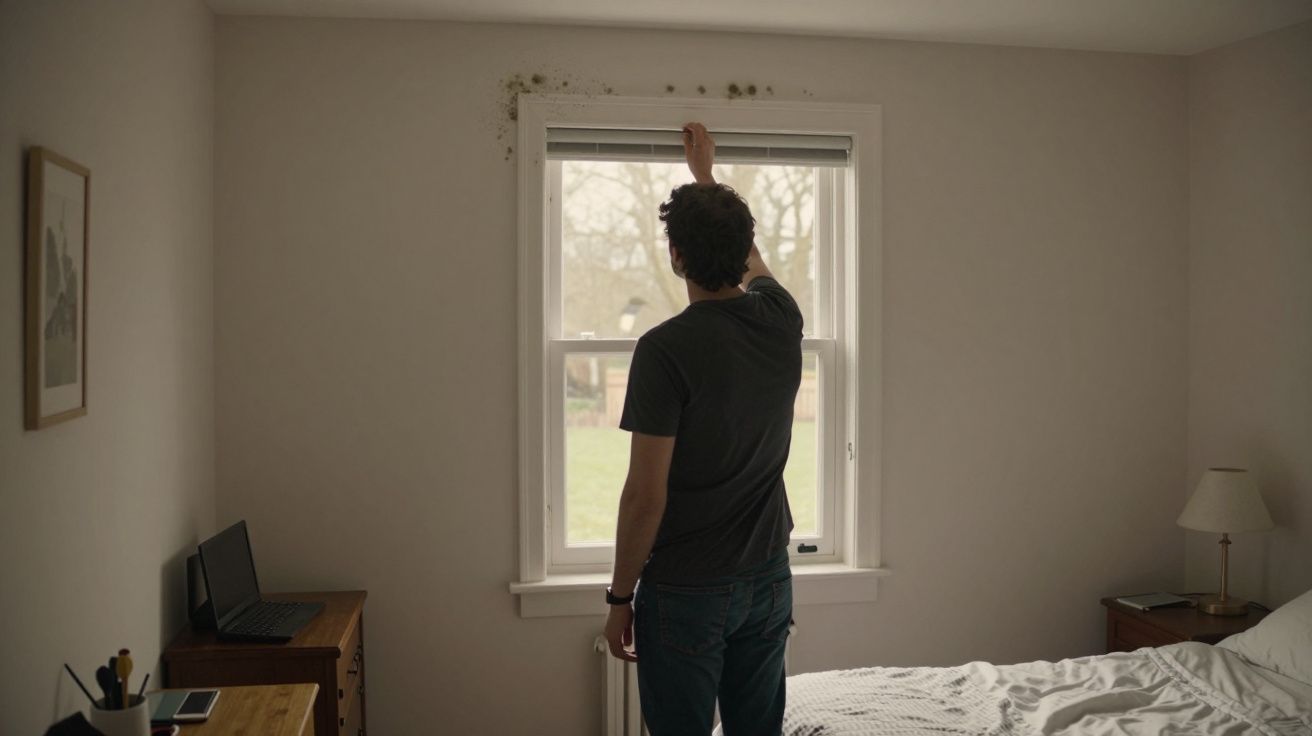
The smell arrive before the eye does. A faintly sweet, musty note when you open the bedroom door; a shadowed line along the silicone in the bathroom; patchy dark freckles behind the wardrobe. You wipe, you spray, it comes back. Outside, the sky is the colour of wet cardboard and the heating is on a timer. Inside, the windows weep every morning.
Then the housing inspector walks in, looks once at the blackened sealant, then up – not at the ceiling, but at the top of the window. A small plastic flap, firmly shut. A tiny slider pushed all the way over. The verdict tombe plus vite que la peinture ne sèche: “If you just left these on the winter setting, half of this mould wouldn’t be here.”
For des milliers de locataires et de propriétaires, that little line of plastic has become invisible. It is there in almost every modern British flat and house, installed by default on uPVC frames and newer timber windows. Yet, when the temperature drops, most of us do the same thing: we shut it tight, draw the curtains, and wonder why the walls start to sweat.
The narrow slot above your window that decides if mould moves in
Look up at the very top of your window frame. You may see a slim plastic grille, or a small tilting flap, or a two‑part slider that can be nudged left and right. That is a trickle vent. It is not decoration. It is the part of the window that is meant to stay slightly open even when the glass is firmly shut.
Windows with trickle vents usually offer at least two positions:
- Closed – the vent snaps or slides shut; almost no air passes.
- Part open / winter setting – a narrow gap allows a slow, steady flow.
- Fully open – more air movement, usually used in milder weather or after showering and cooking.
Housing inspectors say it is that middle option – the modest winter setting – that can make or break the battle against condensation and black mould. It does not feel heroic. You will not hear a whoosh of fresh air. But over hours and days, that subtle movement stops your home behaving like a sealed plastic box.
In older draughty houses, gaps around sash windows and chimneys accidentally did this job. With modern double glazing and insulation, your home is tight enough to trap every shower, kettle boil and wet towel inside. The trickle vent is there to let just enough of that moisture escape without you having to fling the casement wide in December.
Condensation today, black mould tomorrow
Black mould rarely arrives out of nowhere. It sneaks in through a chain of small, everyday habits.
You boil pasta with the lid off, hang washing on radiators, have a hot shower with the door ajar. Your breath alone adds around half a litre of water to the air per person per night. All that moisture has to go somewhere. When the warm, damp air meets cold surfaces – usually windows and external walls – it turns back into liquid. The morning beads of water on the glass are the first warning.
If that film of condensation is left to sit, the surface stays damp. Paint softens, silicone stays clammy, the edges of wallpaper never quite dry. Spores that were already in the air now find the two things they love most: moisture and stillness. Weeks later, the black specks appear in the corners, behind furniture, above skirting boards.
Housing officers talk of the same pattern on winter inspections:
“Every vent shut, furniture tight against cold walls, laundry on every radiator. The air is heavy before you’ve even taken your coat off. The mould is just the visible symptom of a flat that can’t breathe.”
Opening the trickle vent breaks that stillness. It creates a tiny pressure difference, enough to pull stale, humid air out and allow drier air in. You may not notice the movement, but your walls and window reveals do. With less condensation forming and lingering, mould has far less chance to take hold.
Why you keep closing the vent – and why inspectors wish you wouldn’t
On a January evening, with bills climbing and headlines shouting about energy prices, the instinct is simple: keep every scrap of heat in. A plastic flap above the window starts to look like a little leak in your savings.
There are three common beliefs that keep trickle vents shut:
- “It will make the room freezing.”
- “I’m paying to heat the street.”
- “If there’s mould, it must be a structural problem, not ventilation.”
Inspectors and building surveyors gently dismantle each of these in turn.
The winter setting on a trickle vent is designed to move air, not to create a gale. Used properly, it should not turn a warm room into a fridge. What it does is reduce the humidity so your home feels warmer at the same temperature; damp air, sitting on cold walls and windows, makes a space feel clammy and chilly even when the thermostat says 20°C.
The “heating the street” fear misunderstands where the biggest heat losses usually are. In many homes, more warmth escapes through uninsulated lofts, gaps around doors and uninsulated floors than through a small regulated vent. Meanwhile, wet walls and mould damage can lead to repairs that cost far more than what is saved by sliding the vent shut.
As for structure, yes, some homes have genuine damp problems that no amount of vent‑tweaking will solve: leaking gutters, rising damp, missing cavity insulation. But on thousands of visits, housing inspectors see condensation‑related mould that could be significantly reduced by simple habits: vents in winter position, extractor fans used properly, furniture a hand‑width off external walls.
How to use your vents properly this winter
You do not need to live with a constant draught to keep mould at bay. What inspectors recommend looks more like a set of quiet, repeatable habits than a grand renovation.
1. Find and understand your vents
Spend five minutes walking room to room:
- Look above each window for a slot, flap or grille.
- Gently move the slider or flap and notice the positions: closed, part open, fully open.
- If you rent, ask your landlord or managing agent to confirm how they are meant to be set in winter.
If the vent is painted shut or jammed, photograph it and report it. A vent that cannot open is a defect, not a feature.
2. Set a default “winter position”
For most homes, housing officers suggest:
- Bedrooms and living rooms – vent on the part‑open winter setting all day and night.
- Kitchens and bathrooms – vent part‑open as a baseline, then fully open for 20–30 minutes after cooking or showering, alongside the extractor fan.
This gentle, continuous background ventilation is more effective than heroic blasts of air once a week.
3. Combine with small moisture‑cutting habits
A vent is not a magic eraser. It works best with a few low‑effort changes:
- Put pan lids on when boiling or steaming food.
- Use extractor fans whenever you cook or bathe – and leave them running for at least 15 minutes after.
- Dry washing outside or in a ventilated room with the door closed and a window vent or window slightly open.
- Leave a small gap between large furniture and external walls so air can circulate.
If you see condensation on windows in the morning, wipe it away with a cloth or squeegee rather than letting it sit until lunchtime.
4. Watch, adjust, repeat
Every home behaves slightly differently. For a week, pay quiet attention:
- Are certain rooms always misted up?
- Does mould keep returning to the same corner?
- Does opening a particular vent noticeably reduce window condensation the next day?
Use that feedback to fine‑tune which vents sit further open, and when. The aim is not perfection; it is to move from “still, wet air” to “slowly moving, drier air” most of the time.
If your windows do not have trickle vents
Many older properties still have windows without built‑in vents. The principle, however, is the same: gentle, regular air exchange.
Inspectors suggest a simple pattern:
- Morning and evening purge – open opposite windows for five to ten minutes to create a cross‑breeze, then close again.
- Targeted airing – after showers and cooking, open the nearest window slightly and shut the door to that room while the extractor runs.
- Mechanical backup – consider a small, efficient continuous extractor in the bathroom or kitchen if moisture problems are persistent.
If you are a tenant, significant damp and mould should always be reported in writing. Landlords have legal duties to address underlying issues; ventilation is one part of that, not a way to shift blame back onto you.
What this tiny slider really tells us about our homes
The overlooked vent above the window is more than a bit of plastic. It is a symbol of the compromise modern homes require: airtight enough to be efficient, open enough to let us breathe. In the rush to keep heat in and bills down, we sometimes forget that we are not just heating bricks and plaster. We are heating people, furniture, plasterboard, clothes – all of which absorb and release moisture constantly.
Housing inspectors, who step into dozens of living rooms and bedrooms every month, see the quiet cost of ignoring that balance: asthma flare‑ups, children’s bedrooms dotted with black spots, wardrobes that smell of damp, tenants and owners arguing over who is to blame.
The winter setting on a trickle vent will not solve everything. But as a daily gesture, clicked into place before you draw the curtains, it can tip the balance away from mould and towards a home that feels dry, breathable and genuinely warm.
| Key point | What it means | Why it matters |
|---|---|---|
| Use the winter setting | Keep vents part‑open in cold months, not fully shut | Cuts condensation without major heat loss |
| Move moisture, not just heat | Ventilate gently, consistently, especially after cooking and bathing | Prevents black mould taking hold |
| Watch for warning signs | Daily window condensation, musty smells, recurring spots | Signals that air is trapped and habits need adjusting |
FAQ:
- Won’t leaving trickle vents open make my heating bills higher? On the winter setting, vents move a small amount of air to control humidity, not create a cold draught. Drier air often feels warmer, and preventing damp damage usually saves more money in the long run than is lost through the vent.
- Should I close the vents at night to keep bedrooms warmer? Housing inspectors generally advise keeping bedroom vents part‑open overnight. This helps remove moisture from breathing and reduces condensation on cold morning windows.
- Is mould always my fault if the vents are shut? Not necessarily. Structural defects and poor insulation can cause or worsen damp. But closed vents and lack of everyday ventilation often make problems significantly worse. If you are a tenant, report mould to your landlord even if you are improving your habits.
- What if I feel a strong draught from the vent? Check that it is on the part‑open setting, not fully open, and that any window seals are intact. If the vent is whistling or letting in excessive air, it may be faulty or wrongly specified; raise this with your landlord or installer.
- Do I still need dehumidifiers if I use vents properly? In many homes, correct use of trickle vents and extractors, plus small habit changes, is enough. Dehumidifiers can help in very damp properties or where drying clothes indoors is unavoidable, but they should complement, not replace, ventilation.






Comments (0)
No comments yet. Be the first to comment!
Leave a Comment