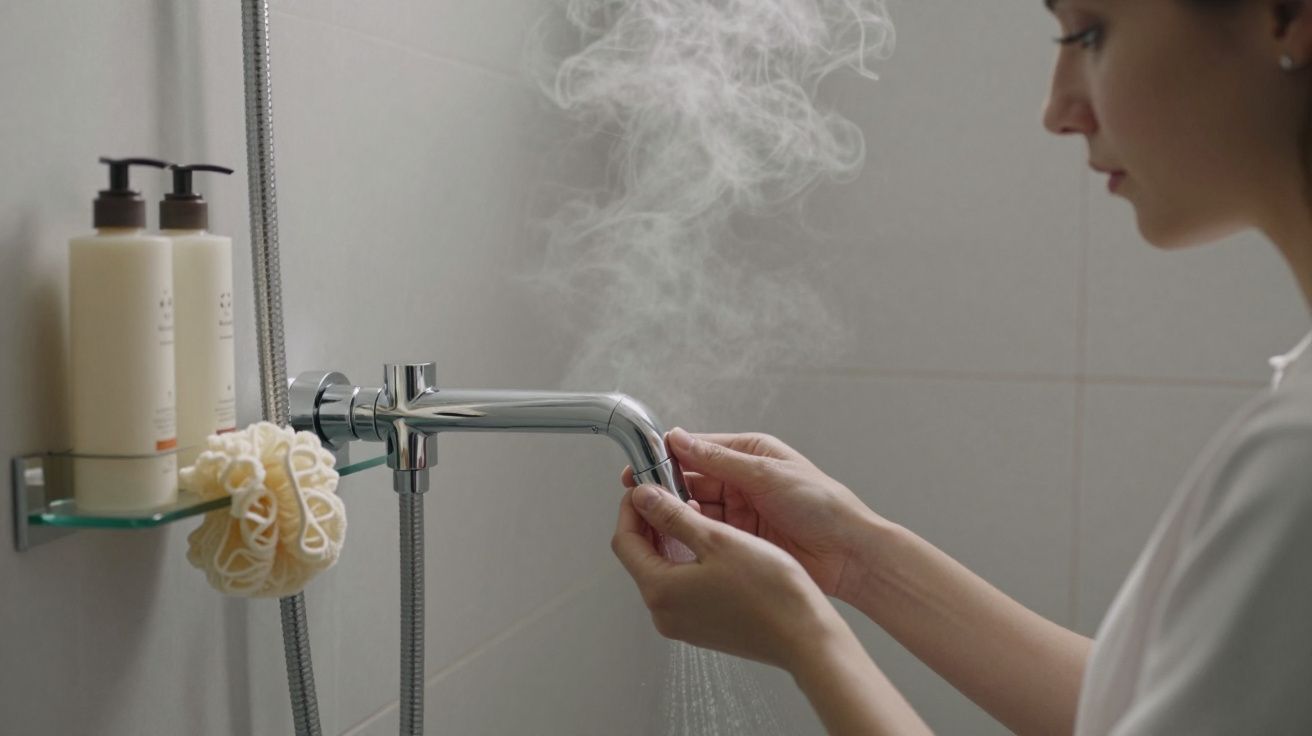
Steam fogs the mirror, the radio mumbles the headlines, and your hand does what it always does: reaches for the tap and twists to your setting. Not the cautious dribble your partner swears is “perfectly warm”, not the bracing splash your housemate calls “wake-up temperature”. Your temperature. The one your body knows before your brain has caught up.
You stand there for a second and feel it. Too hot? A flick colder. Too sharp? Nudge it back towards cosy. Some of us edge the dial a millimetre at a time until the water feels like a hug. Others slam it straight to “as hot as the pipes allow” or “cold enough to sting” and refuse to budge. It seems like nothing more than habit. Behavioural researchers will tell you it’s a little more interesting than that.
Over the last decade, studies on temperature, emotion and social behaviour have piled up. People holding a warm drink judge strangers as kinder. Those in colder rooms sit further apart. Our sense of heat is stitched into how safe we feel, how ready we are to approach or defend, and how much intensity we can tolerate. Your preferred shower temperature, they argue, is a daily micro‑choice that lines up uncannily with how you handle friction with other humans.
It’s not destiny. Nobody can predict your next argument from your boiler settings alone. But your “default shower” does act like a shorthand for how you move between comfort and discomfort, distance and closeness, when things get spiky. The tap becomes a tiny honesty test.
Why your shower is a tiny conflict lab
A hot shower isn’t just about getting clean. It’s your nervous system trying to find its sweet spot. Warmth relaxes muscles, slows breathing, and signals “safe enough to soften”. Cold does the opposite: blood pulls inward, heart rate bumps, attention sharpens. Behavioural scientists call this arousal regulation - the way we nudge our bodies towards calm or alert, depending on what we expect to face.
Conflict is also about arousal. Go in too hot and everything escalates: voices rise, words sharpen, gestures get bigger. Go in too cold and the other person feels shut out, dismissed, or punished with silence. The trick is finding a level where you can stay engaged without burning or freezing each other out.
In experiments, people in warmer environments tend to use more inclusive language (“we”, “us”), show more willingness to cooperate, and report feeling closer to others. Cooler environments tilt us towards detachment, rule‑following and literal thinking. Your shower is a private, repeatable version of that: a controlled way of saying, “How much intensity can I handle right now?”
When researchers interview people about their “ideal” showers and their typical rows, the patterns fall into clusters. Think of them less as rigid personality types, more as weather forecasts for how you’re likely to behave when things get difficult.
The four temperature tribes, and how they tend to argue
1. The warm‑water peacemakers (pleasantly hot, never scalding)
These are the people who like their showers comfortably warm - think “hotel bathroom” rather than “sauna challenge”. They’ll tweak the tap until the water feels just right and stay there, loyal to that middle band every time.
In conflict, warm‑water people often lean towards harmony. They’d rather talk things through than slam doors. They usually:
- Soften criticism with cushions like “I feel” rather than “you always”.
- Look for compromise early.
- Get genuinely distressed by shouting or icy silence.
That same comfort band has a blind spot. Because they dislike extremes, warm‑water peacemakers can dodge conversations that feel too charged. They postpone the “big talk”, smooth over issues with humour, or minimise their own irritation to keep the mood even. The argument doesn’t explode - it just simmers under the surface.
A behavioural researcher in London described them this way:
“They’re brilliant at keeping the room safe, but they sometimes mistake low tension for real resolution.”
2. The scalding‑hot fighters (as hot as you can stand)
Then there are the people who twist the dial almost to maximum and stand in water that would make others yelp. For them, the heat is the point. It feels cleansing, intense, like stepping into a private storm.
In rows, scalding‑hot types tend to go all in. They:
- Raise problems quickly rather than letting them fester.
- Use passionate language and strong gestures.
- See a “good clear‑the‑air” argument as healthy.
They’re often praised for their honesty and hated for their volume. Under stress, they can move fast from hurt to attack, telling themselves they’re “just being direct”. Others experience them as overwhelming, even when they’re technically right. They are more likely to regret the way they said something than what they said.
The same tolerance for intensity that makes a boiling shower feel satisfying can mean they need a higher emotional “temperature” before they notice they’re overheating. By the time they clock it, everyone else is already scorched.
3. The cool‑water controllers (cool or cold, especially in the morning)
If your happy place is a cool or outright cold shower - the “get it over with and wake up” crowd - you probably know exactly why you do it. Cold feels efficient. It’s bracing, unfuzzy, almost moral. You step out feeling alert and a bit proud of yourself.
In conflict, cool‑water people often prize control. They:
- Keep their voice level and their face neutral.
- Reach for facts, timelines and logic when things get heated.
- Prefer to “take a moment” rather than react in the moment.
From the inside, this feels like being sensible. From the outside, it can feel like a wall. Partners and colleagues may complain that you’re distant or uncaring precisely when they most want to see your emotions. You’re not unbothered - you simply default to cooling everything down so you can think clearly.
Researchers note that cold‑preferrers often score higher on traits linked to self‑discipline and emotional suppression. That can be incredibly useful in emergencies and high‑stakes decisions. In close relationships, it sometimes means the real feelings only appear after the conversation is over, when there’s nobody left in the room to hear them.
4. The dial‑twitchers (constantly adjusting, big seasonal shifts)
Finally, there are the people who treat the shower dial like a mixing desk. Hot at the start to thaw out, cooler at the end to “finish fresh”. Lukewarm most of the year, scalding in winter, almost cold in July. Ask them their favourite temperature and they’ll say, “It depends.”
In conflict, dial‑twitchers tend to be adapters. They:
- Adjust their tone to match the other person’s.
- Shift between listening quietly and arguing robustly.
- Change their stance if new information appears.
They’re often great mediators because they can move with the emotional weather in the room. The risk is inconsistency. Someone who was calm and conciliatory yesterday might be fiery today, leaving others unsure which version they’re about to get. Internally, that can feel like responsiveness; externally, it can feel a bit unpredictable.
Behaviourally, this group overlaps with people who score high on context‑sensitivity - those who read the room quickly and adjust. Flexibility is their superpower, but it needs a clear sense of values underneath, or they risk bending too far to whoever shouts loudest.
What the researchers actually say
Under the cosy headlines, the science is more cautious. Shower temperature preferences correlate with a few broad traits that also show up in conflict research:
- Warmth‑seekers tend to prioritise connection and emotional safety. They’re more likely to use collaborative and accommodating strategies.
- Heat‑lovers skew towards approach and intensity. They favour direct confrontation and “sorting things out now”.
- Cool‑lovers lean towards control and distance. They often choose problem‑solving or withdrawal over emotional expression.
- Switchers show higher context‑sensitivity. Their strategy shifts with who they’re facing and what’s at stake.
It’s crucial to say what this doesn’t mean. It doesn’t mean turning your bathroom into a personality test that explains everything. Temperature is one input among many - culture, upbringing, health conditions and even the state of your boiler all play a part.
What it does offer is a concrete, everyday metaphor for how you manage discomfort. Turning the dial is an embodied rehearsal for what you do when things feel too much or not enough. Notice that, and you gain a handle on your arguments that’s more practical than a list of abstract communication tips.
Here’s a compact way to picture it:
| Shower style | Likely conflict reflex | Helpful experiment |
|---|---|---|
| Comfortably warm | Soften, mediate, avoid edges | Practise naming one clear request |
| Very hot / almost scalding | Confront, escalate, “clear air” | Try a 10‑second pause before replying |
| Cool to cold | Detach, analyse, withdraw | Voice one feeling, not just a fact |
| Constantly changing | Adapt, mirror, sometimes flip | Decide your “non‑negotiables” first |
Using your shower to handle conflict better
None of this asks you to change your shower out of guilt. You like what you like. But your daily rinse is a low‑stakes place to experiment with different responses to discomfort - physical and emotional - and that can spill over into how you handle tension with actual people.
A simple routine many therapists now suggest goes like this:
- Name your tribe. Tomorrow morning, pay attention instead of twisting the tap on autopilot. Are you warm, hot, cool, or always changing?
- Make a micro‑shift. Nudge the temperature one small notch away from your usual. Hot fans go a shade cooler; cold fans a shade warmer. Stay with the sensation for 30 seconds.
- Watch your story. Notice what your mind says: “This is pointless”, “I hate this”, “Actually, this isn’t so bad”. That script is very close to what you tell yourself in awkward conversations.
- Translate it to conflict. Before your next tricky chat, remind yourself: I can tolerate a bit more heat/cold than I thought. Use that to either stay present a little longer or step back a little sooner, depending on your usual pattern.
Warm‑water peacemakers might use the shower to practise letting things be slightly “off” without rushing to fix them, then carry that tolerance into hearing criticism. Scalding‑hot fighters could rehearse cooling the water just before it gets painful, then mirror that by taking a breath before the sentence they can’t unsay.
Cool‑water controllers might add ten seconds of warmer water at the start, notice how quickly their body resists, and treat emotional openness the same way: as a temporary, survivable discomfort that makes connection easier. Dial‑twitchers could choose one “anchor temperature” for a week and see what it feels like not to keep adjusting - a direct practice in holding their ground in disagreement.
Let’s be honest: nobody is going to rebuild their entire conflict style in the time it takes for the conditioner to soak in. But you can use that everyday ritual as a small, repeatable lab. The stakes are low, the feedback is instant, and the habit is already there. The next time you reach for the tap, you won’t just be choosing how hot the water runs. You’ll be choosing how you meet heat everywhere else.
FAQ:
- Is there really science behind this, or is it just a neat metaphor? There is solid research linking physical warmth and cold to social judgement, trust and cooperation. The specific link to shower preference is more correlational and practical than definitive. Treat it as a useful lens, not a diagnosis.
- What if my shower temperature is dictated by my skin, hair or energy bills? Then that context matters more than any personality reading. Health conditions, household rules and money all shape what’s possible. Focus less on the exact degree and more on how you react when the water feels “too much” or “not enough”.
- Can my temperature - and conflict style - change over time? Yes. People who start cold showers for fitness often report being less avoidant of discomfort in general. Likewise, major life events, therapy or new relationships can shift how you argue and what you tolerate. The dial is never fixed.
- Should I force myself into cold showers to become “tougher” in conflict? Not necessarily. Extremes aren’t inherently better. The aim is flexibility: being able to warm up when closeness is needed and cool down when intensity is unhelpful. Small, sustainable changes beat dramatic stunts you abandon after a week.


Comments (0)
No comments yet. Be the first to comment!
Leave a Comment