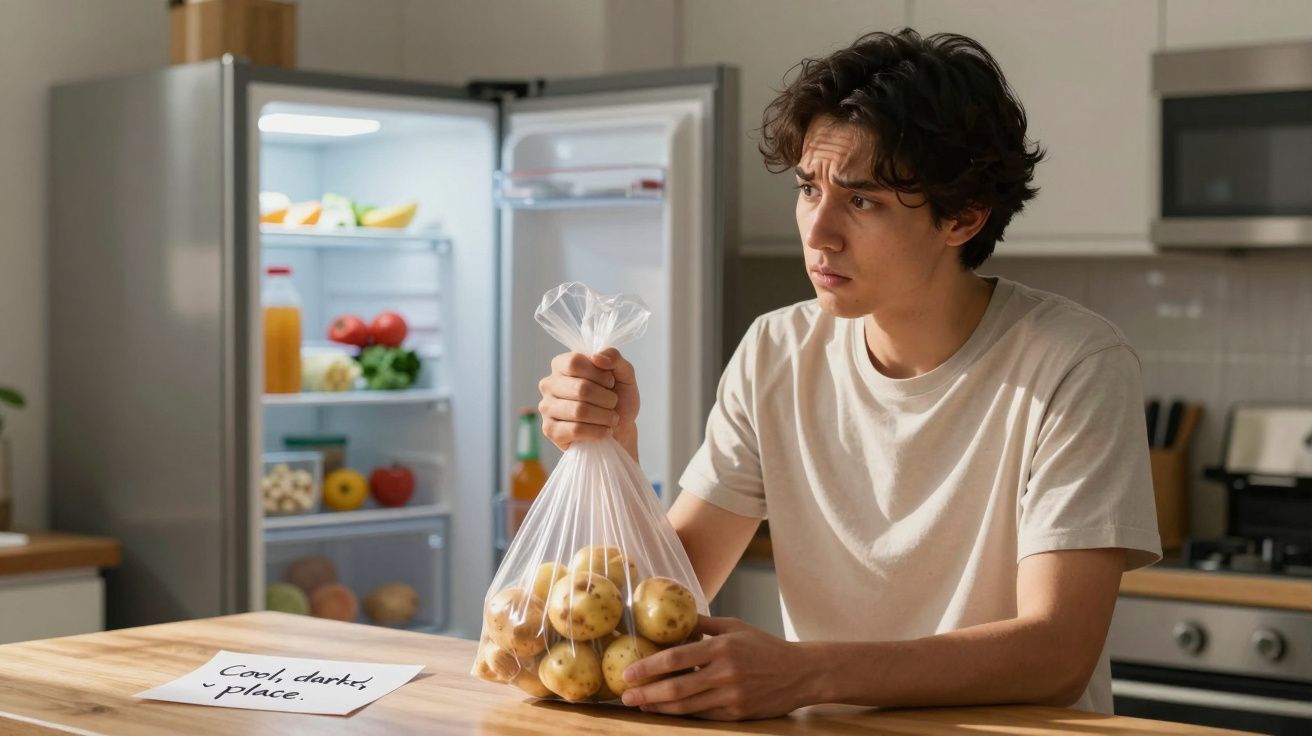
You pull open the fridge, hunting for milk, and your hand lands on a bag of potatoes tucked in the salad drawer. It feels like you are being sensible: cool, dark, out of the way - what could be safer? In surveys, a large chunk of UK households now store spuds in the fridge for exactly that reason.
Food safety officers say that quiet habit is backfiring. In a cold fridge, potatoes slowly change on the inside in ways you cannot see, nudging up a compound linked to cancer and spoiling the very flavour you bought them for.
Why the fridge feels right – but causes problems
The logic is straightforward. We are told that potatoes like it “cool and dark”, and the fridge is both. Modern kitchens run warm, cupboards are cramped, and a chilly drawer looks like the least risky option.
The hitch is that fridges are too cold for raw potatoes. Below about 6–8 °C, their starch starts to convert into sugars in a process called “cold sweetening”. Those extra sugars are what send both taste and health in the wrong direction when you cook them.
Food safety agencies across Europe, including the UK Food Standards Agency (FSA), now advise against refrigerating raw potatoes for that reason. The advice is not fussy chef’s lore; it is based on how those extra sugars behave in a hot oven, fryer or roasting tin.
What really happens inside a chilled potato
On the surface, a fridge-kept potato can look perfectly normal. Firm, no sprouts, no obvious green. Inside, its chemistry is quietly shifting.
At typical fridge temperatures (around 3–5 °C):
- Enzymes push starches to break down into simple sugars such as glucose and fructose.
- The longer and colder the storage, the more this “sweetening” builds up.
- When those sweetened potatoes hit high heat, sugars react with natural amino acids in a browning process (the Maillard reaction).
That browning is what gives roast potatoes their appetising colour and crispy edges - up to a point. In over‑sweetened potatoes, the reaction runs faster and harsher, creating much darker patches and a compound that food safety officers are actively trying to keep down: acrylamide.
Key point: cold storage does not create acrylamide on its own - but it loads the potatoes with extra sugar, so high‑temperature cooking creates more acrylamide, more quickly.
Acrylamide: the health risk food officers worry about
Acrylamide forms naturally when starchy foods are cooked above about 120 °C until golden or darker. Chips, crisps, roast potatoes and jacket potatoes with browned skin are all in the frame.
Health agencies classify acrylamide as a probable human carcinogen. The science does not show that one tray of roasties will cause harm, but it does suggest that keeping average intake as low as reasonably achievable over a lifetime is wise.
Refrigerated potatoes matter because they:
- Contain higher levels of free sugars.
- Brown faster, often turning very dark or patchy.
- Can produce noticeably more acrylamide when fried, roasted or baked at high temperatures.
Boiling, steaming and microwaving (without browning) form far less acrylamide, whatever the storage method. The risk zone is the golden‑to‑dark‑brown end of cooking, especially for chilled, sweetened spuds.
The FSA’s practical advice can be boiled down to two simple ideas:
- Store raw potatoes in a cool, dark, non‑fridge place.
- Cook them to a golden yellow rather than a deep brown.
Taste and texture: why chilled potatoes disappoint on the plate
Even if you are relaxed about acrylamide, the fridge still does your potatoes no favours in the flavour department. The extra sugars shift how they cook.
Cooks often report that fridge‑stored potatoes:
- Taste unexpectedly sweet, especially in chips and roasties.
- Brown on the outside before the centre is fully cooked, giving hard or gummy middles.
- Develop uneven colour - pale in places, nearly mahogany in others.
Floury potatoes intended for fluffy roasties or mash are hit hardest. They rely on a particular starch structure to break down nicely. Cold sweetening interferes with that, so the result can be denser mash, stodgy interiors and a slightly cloying taste, even if you salt the water generously.
Waxy salad potatoes are a little more forgiving, especially when boiled, but they still pick up sweetness and can go oddly glassy in texture if stored very cold for long periods.
How UK food safety officers say you should store potatoes
The sweet spot for raw potatoes is cooler than your kitchen but warmer than your fridge. In practice, most homes can get close enough with a few simple tweaks.
Aim for:
- Temperature: ideally 6–10 °C, “cool” rather than cold.
- Light: dark or very low light to avoid greening.
- Air: good ventilation so moisture does not build and rot does not spread.
- Container: paper bag, hessian sack, or a ventilated box - never sealed plastic.
Good places in many UK homes:
- A cool cupboard away from the oven.
- A pantry, cellar or understairs cupboard that does not get damp.
- An attached garage or shed that stays frost‑free over winter.
Less ideal, but common, spots include under‑sink cupboards (often warm and humid) and sunny worktops. If you have no truly cool space, the priority is still to keep potatoes out of the fridge, in the dark, and in something that can breathe.
| Storage place | Recommended? | Notes |
|---|---|---|
| Fridge | No | Raises sugars, boosts acrylamide |
| Cool, dark cupboard | Yes | Best choice in most homes |
| Warm kitchen shelf | So‑so | Use quickly, watch for sprouting |
Quick storage checklist
- Take potatoes out of plastic packaging once home.
- Brush off loose soil, but do not wash before storage.
- Keep them away from onions, which speed up sprouting.
- Check the bag weekly and remove any soft or mouldy ones.
Greening or heavy sprouting signals another, separate safety issue: glycoalkaloids such as solanine. These natural toxins increase near the skin where potatoes are green or bitter. Cut out green patches generously, or discard heavily affected tubers.
What about cooked potatoes and leftovers?
There is a twist in the tale. Raw potatoes should not live in the fridge - but cooked potatoes absolutely should once they have cooled slightly.
Leaving cooked potatoes at room temperature for hours can encourage bacteria such as Clostridium botulinum in low‑oxygen conditions (for example, foil‑wrapped baked potatoes). Food safety officers advise:
- Cool cooked potatoes quickly (within 1–2 hours).
- Store in the fridge in a shallow container.
- Reheat thoroughly, piping hot all the way through, and only once.
So: raw potatoes out of the fridge, cooked potatoes into it. The line is simple, but many households have it the wrong way round.
Common mistakes and easy fixes
Mistake 1: “It’s winter, the garage is freezing - I’ll just use the fridge”
If your only “cool” place risks dropping below freezing, potatoes can be damaged as their cells burst, giving waterlogged, grainy textures. Instead, insulate them slightly in a cardboard box in the cold area, or move smaller quantities into the coolest indoor cupboard you have and buy little and often.
Mistake 2: Washing before storage
Water trapped in the skins invites rot. Keep the dirt until you are ready to cook; then wash and scrub as needed. One muddy sack in a dry place keeps longer than a clean, damp bag in a warm one.
Mistake 3: Chilling new potatoes “to keep them fresh”
Young, thin‑skinned potatoes are even more prone to sweetening in the fridge. Treat them gently: a breathable bag, a cool dark shelf, and use within a week for the best texture and taste.
Mistake 4: Roasting fridge‑stored potatoes as usual
If you must cook potatoes that have already spent time in the fridge, adjust the method:
- Parboil first, then roast at a slightly lower oven temperature.
- Aim for a light golden colour rather than a deep brown.
- Avoid double‑frying chips made from chilled potatoes, which compounds browning.
Why this small change quietly improves both safety and flavour
Shifting potatoes out of the fridge does not feel like a grand health intervention. It is quicker than sorting your recycling and cheaper than any “superfood” swap. Yet it cuts down a known, avoidable source of acrylamide, while nudging your roasties, chips and mash back towards the taste you expect.
Household food safety is often about rhythm, not perfection. Where you drop a bag of spuds when you come back from the shops sets that rhythm for weeks. Move them from the salad drawer to a cool cupboard once, and you will not have to think about acrylamide chemistry every Sunday dinner.
Point clé
| Point clé | Détail | Intérêt pour le lecteur |
|---|---|---|
| Froid excessif | La réfrigération augmente les sucres dans la pomme de terre | Comprendre pourquoi le frigo nuit au goût et à la sécurité |
| Risque santé | Plus de sucres = plus d’acrylamide en cuisson forte | Savoir quel geste simple réduit un contaminant indésirable |
| Bon stockage | Endroit frais, sombre, ventilé, hors frigo | Appliquer une solution pratique dans une cuisine ordinaire |
FAQ:
- Is it ever okay to keep raw potatoes in the fridge? For general home use in the UK, food safety officers say no. The slight gain in shelf life is outweighed by extra sugar build‑up and higher acrylamide when you fry or roast them.
- If I have already stored potatoes in the fridge, must I throw them away? Not usually. Use them in lower‑temperature dishes such as boiling, steaming or stews, where acrylamide formation is minimal, and shift future purchases to a cool cupboard instead.
- Do sweet potatoes have the same issue? Sweet potatoes are botanically different and naturally high in sugars, so the cold‑sweetening effect is less relevant. However, general quality still suffers in very cold storage, so cool, dark cupboard storage is usually better than the fridge.
- How can I reduce acrylamide when cooking potatoes? Store them out of the fridge, soak cut chips briefly in water and dry them, cook at moderate temperatures, and aim for a light golden colour rather than dark brown. Avoid over‑crisping thin chips and crisps.
- Why do supermarkets sometimes sell potatoes in plastic if they need to breathe? Plastic helps transport and keeps soil contained, but it is not ideal for long storage at home. Food safety guidance assumes you will remove or open the plastic once back in your kitchen and transfer potatoes to a breathable container.




Comments (0)
No comments yet. Be the first to comment!
Leave a Comment