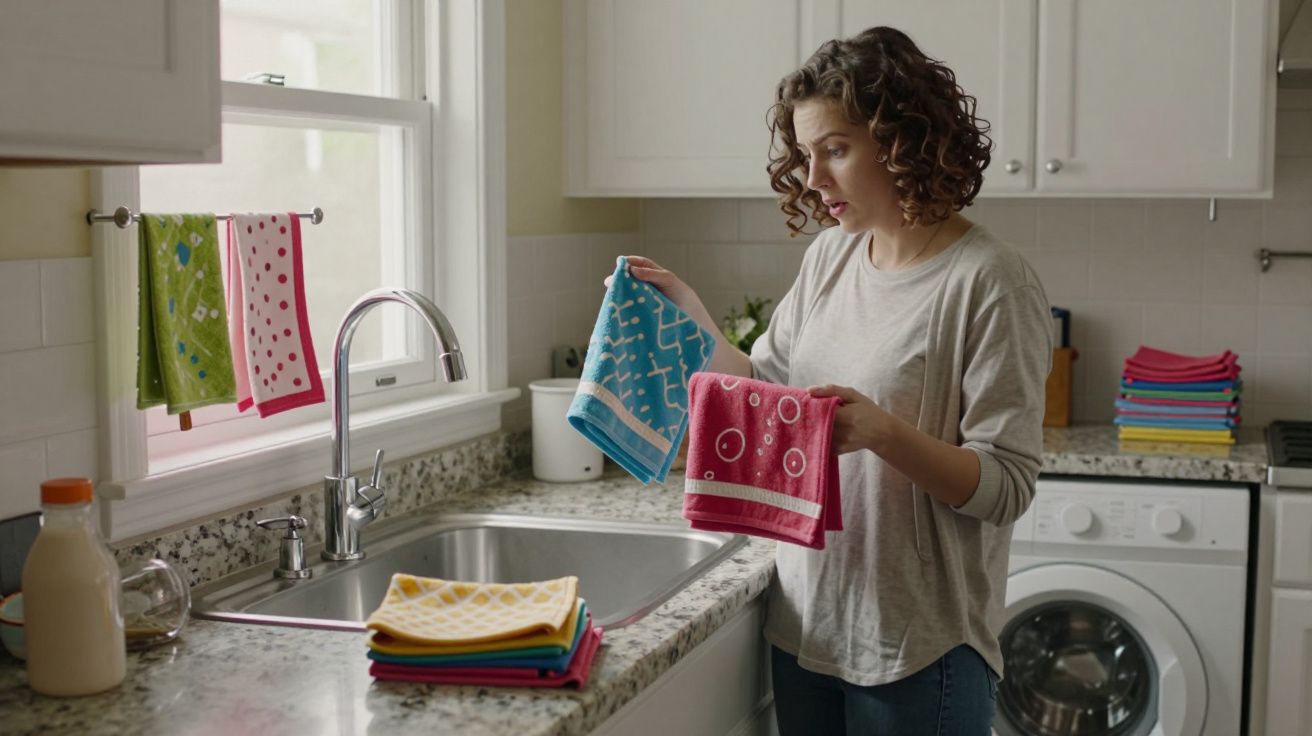
You toss it over your shoulder, dry your hands on it, wipe a splash off the floor and polish the wine glasses before guests arrive. The kitchen tea towel is background noise in most homes – always there, rarely washed as often as your socks. Yet when microbiologists swab British kitchens, that soft square of fabric repeatedly comes back as one of the dirtiest items in the house.
The awkward twist? In many tests, the average household loo seat carries fewer live bacteria than the average tea towel. The toilet is dry, usually cleaned with purpose and treated as “dirty”. The towel is damp, cosy and overlooked – perfect for microbes that do not care how clean your kitchen looks.
People are tired of being told everything is a hazard. But food poisoning, stomach bugs and lingering sniffles often trace back to very ordinary habits. The aim is not to bleach your life, just to put the real risks in the right order.
Below, microbiologists’ lab swabs turn into a simple, realistic wash schedule you can actually keep, plus a few tiny shifts that leave your kitchen calmer and safer.
What the swabs actually show
When researchers sample homes, they tend to swab the usual suspects: toilet seats, sinks, light switches, phones, chopping boards, sponges and tea towels. Again and again, tea towels and dishcloths sit near the top of the “dirtiest” list, often beating the loo seat for total bacterial load.
It is not just harmless skin flora. Studies regularly pick up E. coli, Enterococcus and Staphylococcus aureus on towels – the same families of bacteria linked to tummy upsets, wound infections and more. The risk is not guaranteed illness, but a higher chance of moving germs from raw food to ready-to-eat leftovers, children’s snacks and your own hands.
On a typical day, the loo seat is dry and briefly used. The tea towel is damp, warm and handled constantly – that is the difference.
Toilet seats are usually wiped with disinfectant, left to air and touched for seconds. Tea towels sit folded on the oven door or bunched by the sink, staying humid for hours. Microbes do not thrive on porcelain that dries quickly; they flourish in cotton that never quite gets a chance to.
How tea towels turn into germ hotels
Bacteria need three things: moisture, food and time. A busy kitchen tea towel offers all three on a loop.
You wipe up pasta water, then dab your wet hands, then polish a plate with a faint smear of gravy. Each pass leaves a tiny film of nutrients. If someone has just handled raw chicken or cracked eggs, that film can carry more problematic bugs. In a warm room, numbers multiply quickly on the damp fibres.
Certain habits supercharge the problem:
- Using the same towel to dry hands, dishes and spills on the floor.
- Wiping raw meat juices or egg drips, then keeping the towel in service.
- Leaving towels scrunched and damp on the worktop or over the tap.
- Letting them hang for days between washes, especially in larger households.
It is less about being “dirty” and more about giving microbes an easy ride. The good news is that a few small changes cut their odds dramatically.
The simple wash schedule microbiologists recommend
Public health labs tend to agree on one theme: treat tea towels like underwear, not curtains. They need frequent, hot washes, not an occasional gentle cycle.
Here is a straightforward schedule that covers most UK homes:
Main hand-drying towel
- Swap for a clean one every day in busy households; every other day at most if you live alone.
- If anyone has a tummy bug, change it after each person and wash on a hot cycle.
Dish-drying tea towels
- Replace every 1–2 days, or daily if you cook a lot or the kitchen runs warm.
- Avoid using them on hands or surfaces; keep them just for clean crockery and cutlery.
“Emergency” towels for raw meat or eggs
- If a towel touches raw chicken, mince, eggs or their juices, treat it as contaminated.
- Put it straight in the laundry basket and wash at 60°C with detergent before reusing.
General rule for washing
- Use 60°C or higher with a good detergent for kitchen towels; this hits most common bugs.
- Dry completely – on a hot tumble setting or in full air and sun. Damp fibres undo half the work.
Think “little and often”: frequent hot washes beat the occasional scalding deep clean.
A quick guide by household type
| Household | How often to change towels | Wash guidance |
|---|---|---|
| Single / couple, light cooking | Every 2 days for hand and dish towels | 60°C wash once or twice a week |
| Family with children, daily cooking | Hand towel daily, dish towel daily or every other day | 60°C wash 2–3 times a week |
| Shared house / heavy cooking | Hand towel daily, dish towel daily | 60°C wash at least 3 times a week |
If that sounds like a lot, rotate a small stack. Three or four tea towels in active use make the system much easier than stretching one heroic towel through the week.
Small habits that make a big difference
Frequency is one lever. The other is how you use and store the towels between washes.
Separate their jobs.
Ideally, one towel for hands, one for clean dishes, and separate cloths or paper for raw meat spills and worktops. When everything has its lane, cross-contamination drops.Let them breathe.
Hang towels on a rail or hook so air can circulate. Avoid tight loops over the oven handle where the middle stays damp.Give them daylight.
Sunlight and fresh air help fabric dry faster and can reduce bacterial survival. Even an open window over the sink after dinner makes a difference.Colour-code quietly.
Use one colour for hand towels, another for dish towels, and perhaps a darker, clearly “sacrifice” colour for messier tasks. It saves arguments and mistakes on busy evenings.Mind where your hands have been.
Wash or sanitise your hands before reaching for the clean towel, especially after handling raw meat, pets or the bin. The towel is for drying clean hands, not finishing the wash.
None of this requires a lab coat. It is closer to tidying a room than scrubbing an operating theatre.
When to retire a tea towel for good
Even with good care, towels do not last forever. Fabric breaks down, weave opens up and odours cling more stubbornly.
Consider binning or downgrading a towel to “garage rag” status if:
- It smells stale or sour straight out of the wash.
- Stains from meat, sauce or grease refuse to budge.
- The fabric is fraying, thin or full of pulls.
- Your household has just had a confirmed food poisoning episode – err on the side of caution and replace the main towels used during that period.
Tea towels are relatively cheap compared with a takeaway bill after a bout of campylobacter. A once-a-year refresh of the stack is more than many labs would dare hope for.
Clean enough, without the obsession
It is easy to feel overwhelmed by hygiene advice, especially when every surface seems to hide another warning. Microbiologists are not asking you to boil-wash your life. Their point is simpler: if you are going to care about germs anywhere, the kitchen textiles deserve more attention than the ceramic throne.
A short rotation of clean towels, a hot wash routine and clearer “jobs” for each cloth do most of the lifting. The rest is common sense: wash your hands properly, keep raw food separate, and let fabric dry.
Your kitchen will never be sterile. It does not need to be. It just needs your hardest-working square of fabric to stop secretly doing the toilets’ job.
FAQ:
- Is it really true that my tea towel can be dirtier than the toilet seat? In many home studies, yes. Loo seats tend to be dry and are cleaned intentionally, which limits bacterial growth. Tea towels stay damp, pick up food residues and are handled constantly, so they often carry more live microbes, including some linked to foodborne illness.
- Is a 40°C wash enough for tea towels? For lightly used towels in a low-risk home, 40°C with a good detergent is better than infrequent washing. However, microbiologists generally recommend 60°C or above for kitchen textiles, especially if they have handled raw meat, eggs or if anyone in the house is vulnerable.
- Do I need “antibacterial” tea towels and detergents? Not usually. A standard detergent, a 60°C wash and thorough drying remove most everyday risks. “Antibacterial” labels can sound reassuring but are less important than how often and how hot you wash.
- Are paper towels safer than fabric ones? Disposable paper is very effective for raw meat spills and high-risk messes, as you use it once and bin it. For daily hand and dish drying, washable fabric towels are fine – and more sustainable – as long as you follow a regular hot-wash schedule and avoid using the same towel for every task.
Comments (0)
No comments yet. Be the first to comment!
Leave a Comment